No, Russian towns were not sites of gastronomic innovation and delight. At least, not in the late 18th and early 19th century.
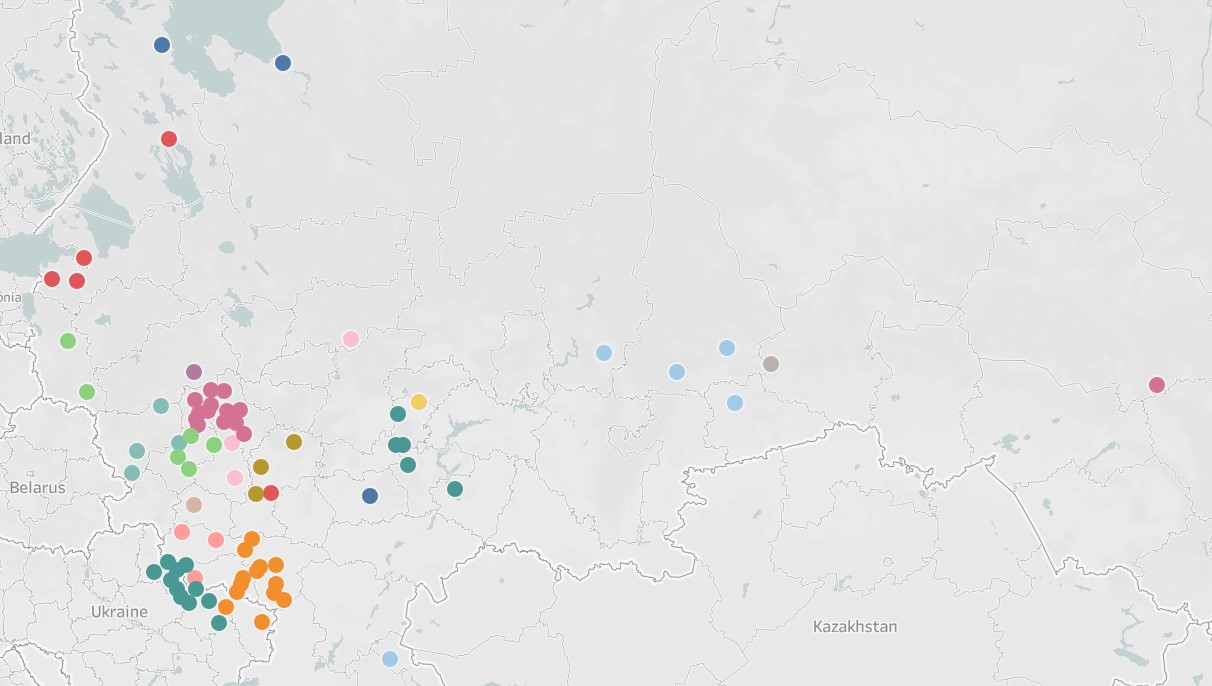
That said, eating and drinking were necessary parts of daily life and the plans give us a sense of how consumption fit into urban space. They show us the sites where food was stored (granaries and the occasional cattle yard), prepared (breweries and butcheries), sold (shops for meat, fish, and grain), and consumed (taverns - see the distribution map at right).
There is a lot we cannot see. Agricultural space is largely absent from the plans, and most cooking and eating and drinking happened in the private homes that feel tangential to the plans. We cannot peer into kitchen gardens or see any of the transient activities - the itinerant vendors or occasional markets, for example - that did not occupy formal space in town.
But there is a lot to learn about the space of food and drink. There are existing hypotheses to be confirmed and new hypotheses to be formulated. Let's get to work.