Browse Items (1271 total)
Sort by:
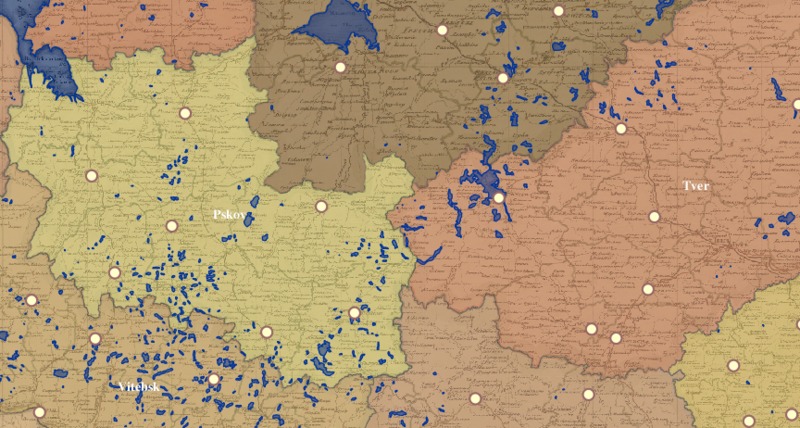
The Piadyshev Atlas contains attestations of 459 district (uezd) towns. This is a bit odd, given the fact that the atlas describes 591 districts. How might we make up - or at least explain the shortfall?
To start, the 43 districts in the Grand Duchy…
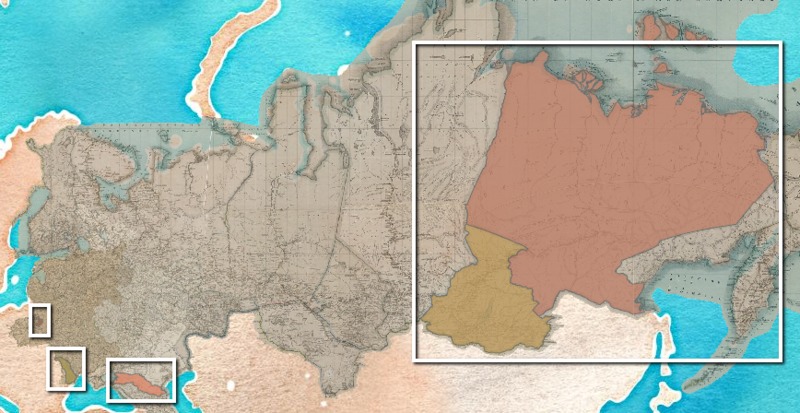
Provinces came in two forms. While the guberniia was the more standardized and more prolific form, the oblast' played an important role in the administrative geography of the empire as well. The oblast' was a secondary administrative unit.A quick…
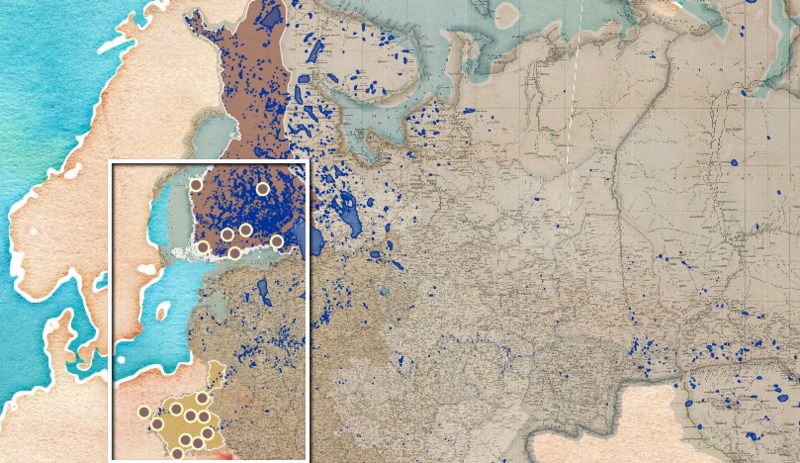
Large towns (большие города) are found only in the Kingdom of Poland and the Grand Duchy of Finland.
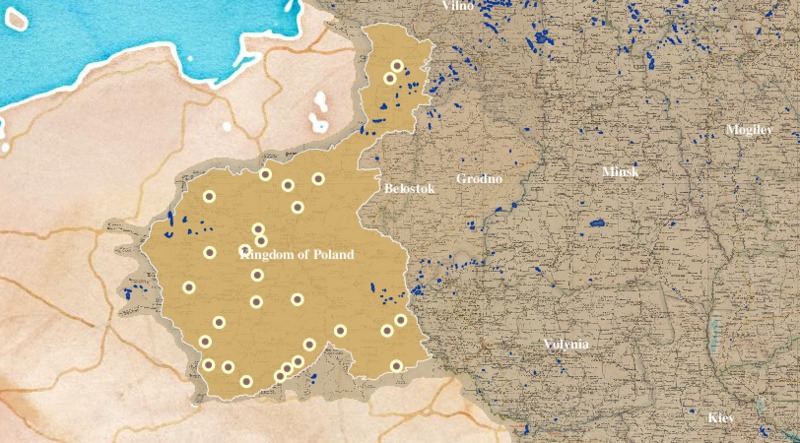
Mid-size towns are found only in the Kingdom of Poland and Grand Duchy of Finland. They are rough equivalents of the uezd towns.
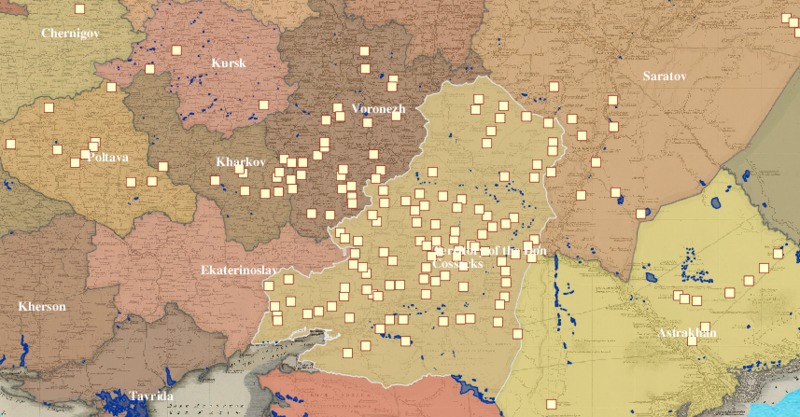
While most peasants lived in villages, a peasant holding a farmstead (хутор, khutor) lived - together with his family - on the land.
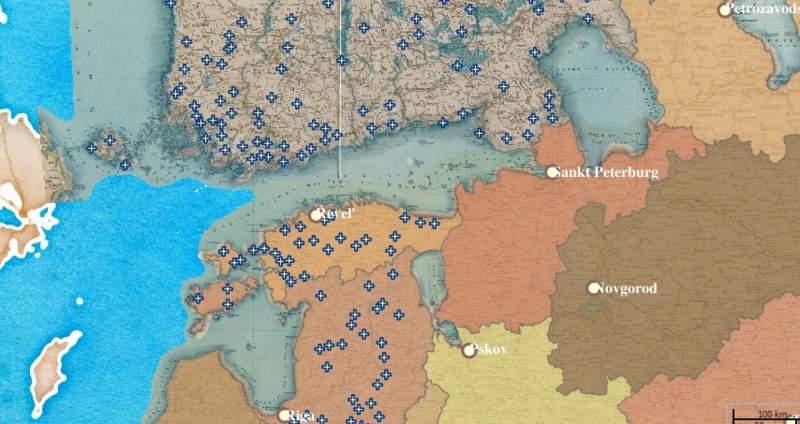
On the Piadyshev atlas, the kirchspiel (кирхшпил) denotes the presence of aProtestant parish. This layer doubles as a rough approximation of Protestant churches.
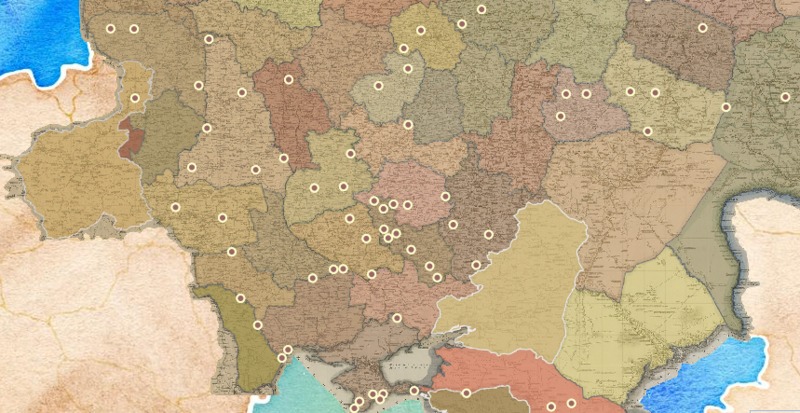
Russian law differentiated between towns that were, and towns that were not, seats of administrative power. In each district (uezd) there could be only one "district town" (uezdnyj gorod); other populated places that enjoyed the privileges of urban…
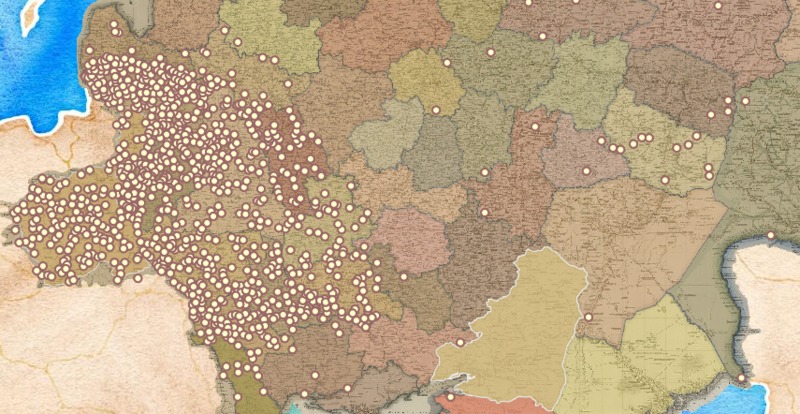
The "minor town" (mestechko/местечко) was distinct from other rural and urban settlement types. According to most sources, the mestechko had four distinguishing features:
In ethnic terms, the inhabitants of a mestechko were generally Jewish.
In…
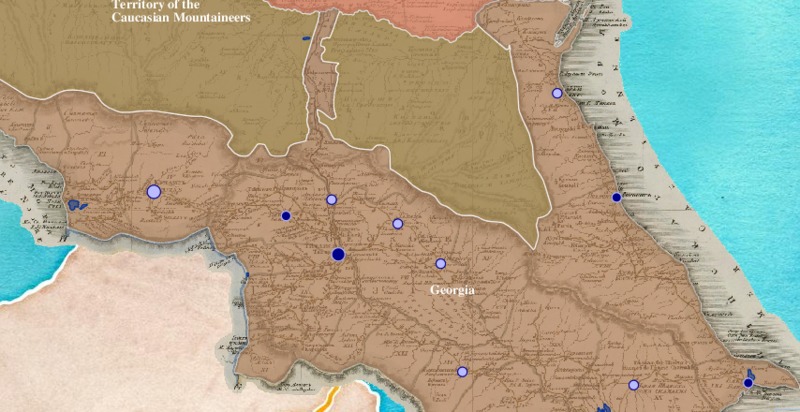
In the former kingdom of Georgia, annexed by Russia in 1801, we find towns distinguished by size and marked as fortified or unfortified.
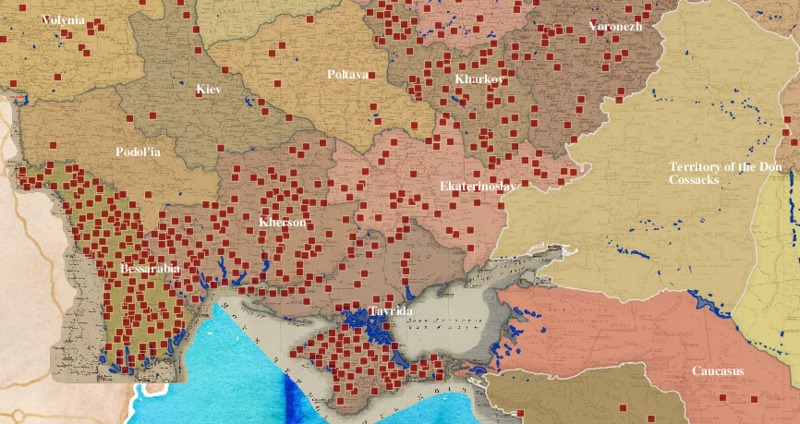
Villages came in several varieties, thederevnia and theselo being by far the most numerous. This layer describes derevni (деревня > деревни), which correspond, more or less, to the English term "hamlet": a small, unincorporated, rural settlement.…