Browse Items (1271 total)
Sort by:
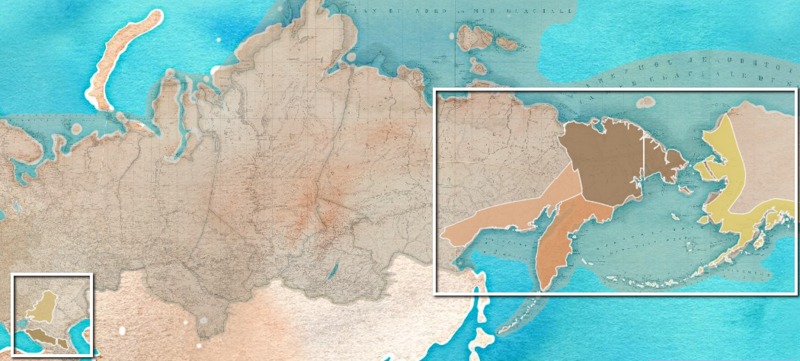
Imperial officials who daydreamed about looking out the frosty windows of the Winter Palace onto a relentlessly well-organized and highly standarized state were in for disappointment. Wedged in at the margins of the more-or-less regularized provinces…

The Piadyshev Atlas describes two semi-autonomous, or primary, administrative regions (the atlas does not include mention of namestnichestva or governor-generalships):
the Grand Duchy of Finland (acquired in 1809);
the Kingdom of Poland…
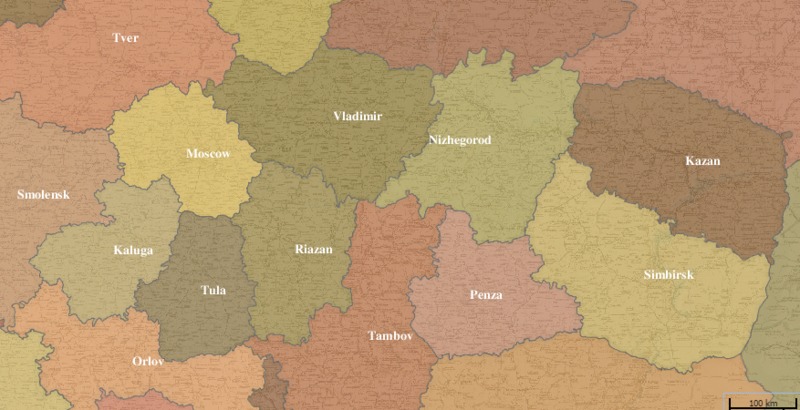
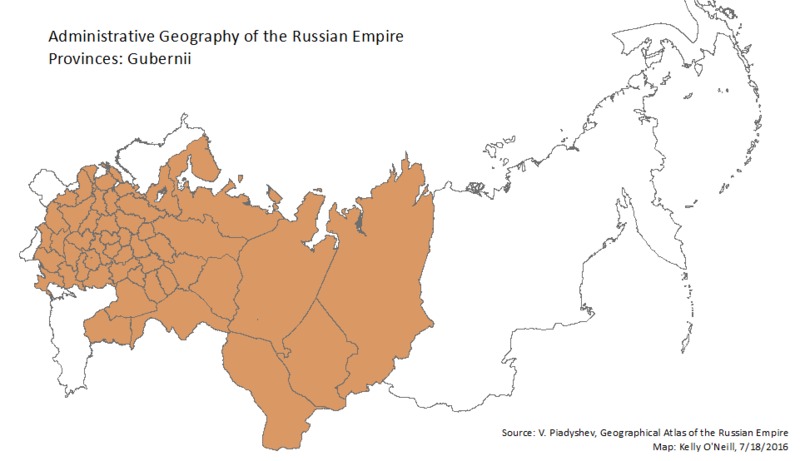
Provinces were the building blocks of the imperial administrative structure. Starting in the 18th century, provinces came in two forms: the guberniia and the oblast'. Empress Catherine II determined the shape and structure of the former, dominant…
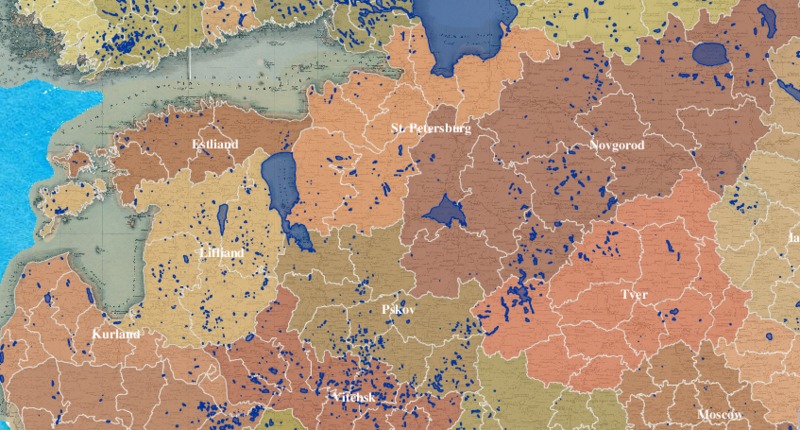
The districts were tertiary administrative units. Each was nested within a secondary unit (guberniia, oblast', or irregular division).The Piadyshev Atlas describes 583 districts, including 24 vladeniia and okruga in Georgia, 7 nachal'stva in the Don…
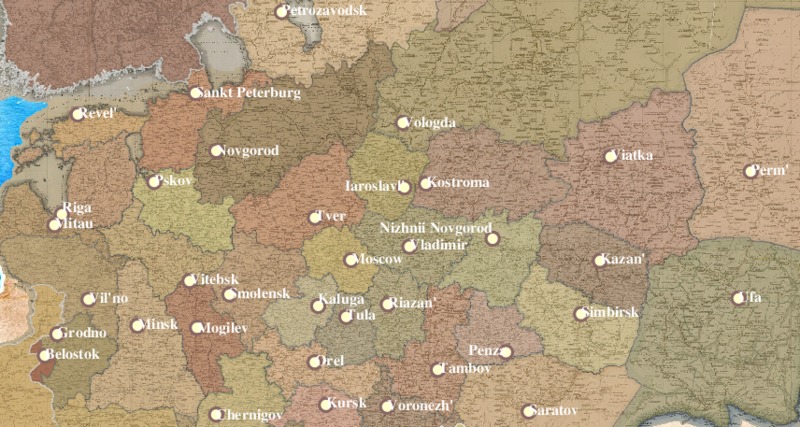
The provincial town (губернский город) was the administrative capital of the province, the seat of the civil governor, and in some cases a military governor or governor-general. Provincial towns ranged from the relatively humble (Vologda) to the…
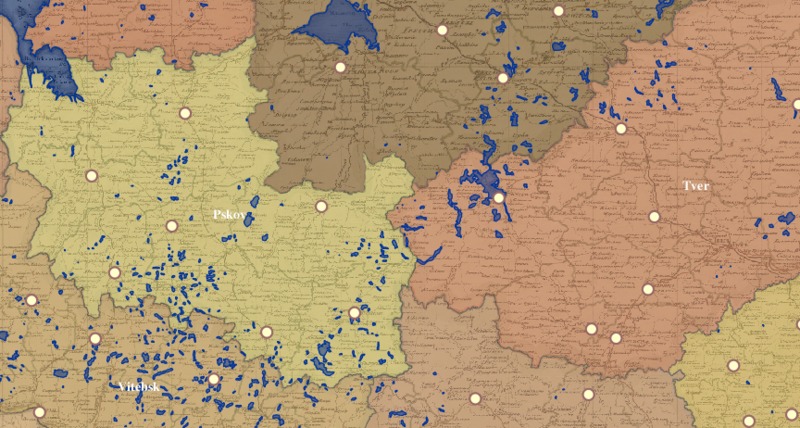
The Piadyshev Atlas contains attestations of 459 district (uezd) towns. This is a bit odd, given the fact that the atlas describes 591 districts. How might we make up - or at least explain the shortfall?
To start, the 43 districts in the Grand Duchy…
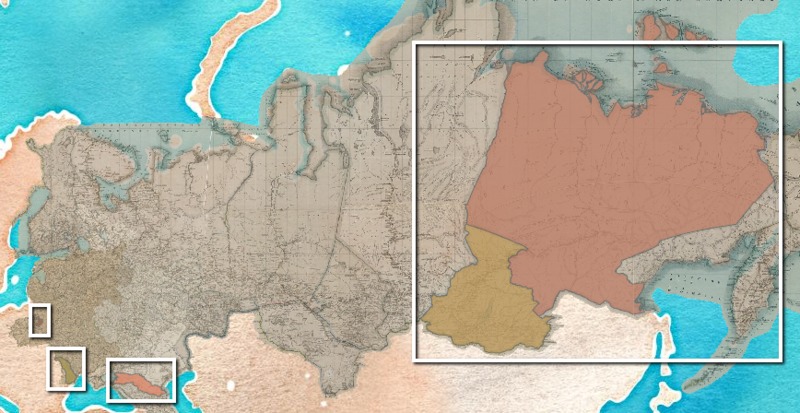
Provinces came in two forms. While the guberniia was the more standardized and more prolific form, the oblast' played an important role in the administrative geography of the empire as well. The oblast' was a secondary administrative unit.A quick…
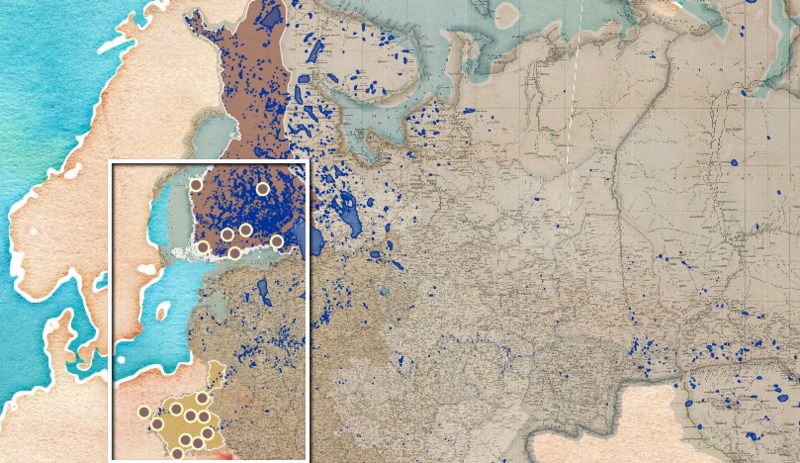
Large towns (большие города) are found only in the Kingdom of Poland and the Grand Duchy of Finland.
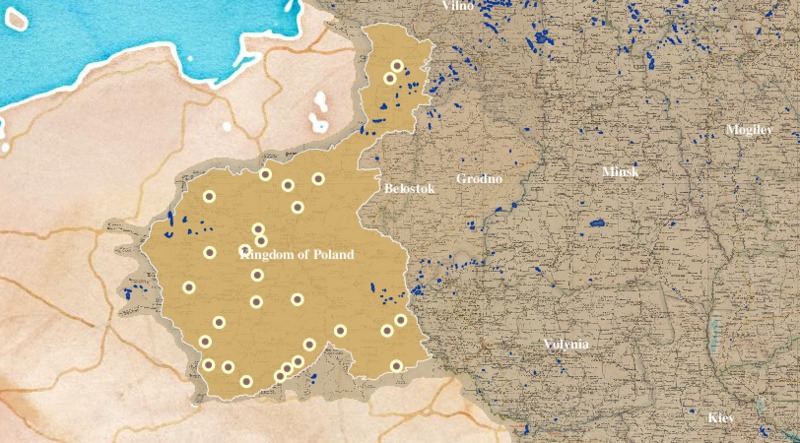
Mid-size towns are found only in the Kingdom of Poland and Grand Duchy of Finland. They are rough equivalents of the uezd towns.