Browse Items (1271 total)
Sort by:
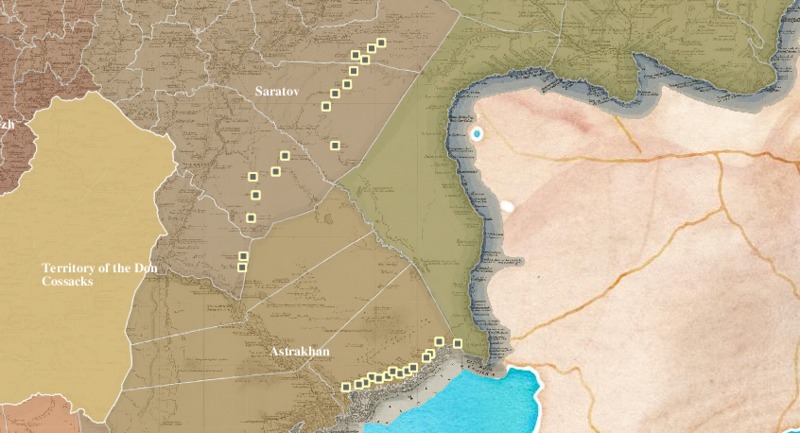
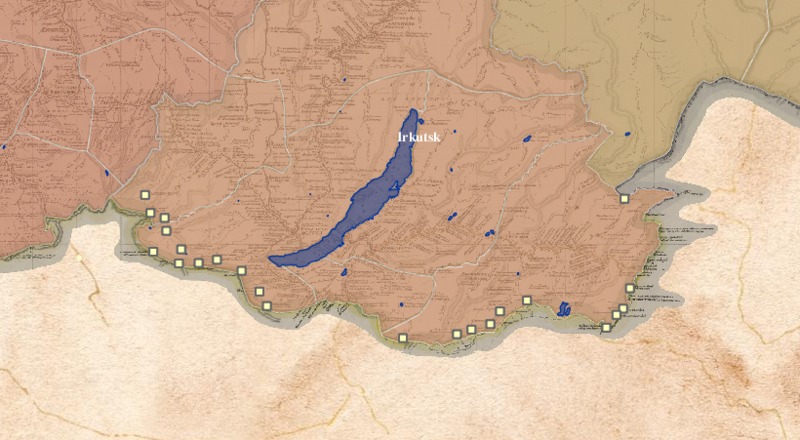
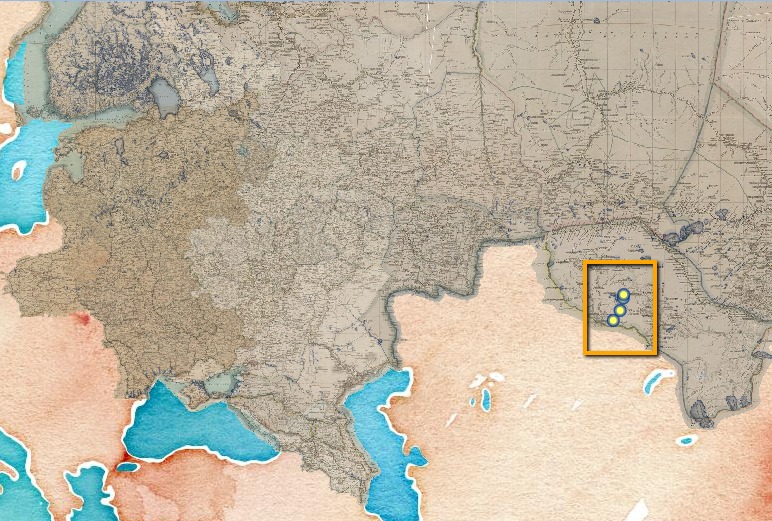
This is one of the most surprising map layers. Of the 59 sheets of the Piadyshev atlas, only one includes mosques in its legend. If you were to take the atlas as an authoritative source for the cultural geography of the empire, you would have no…
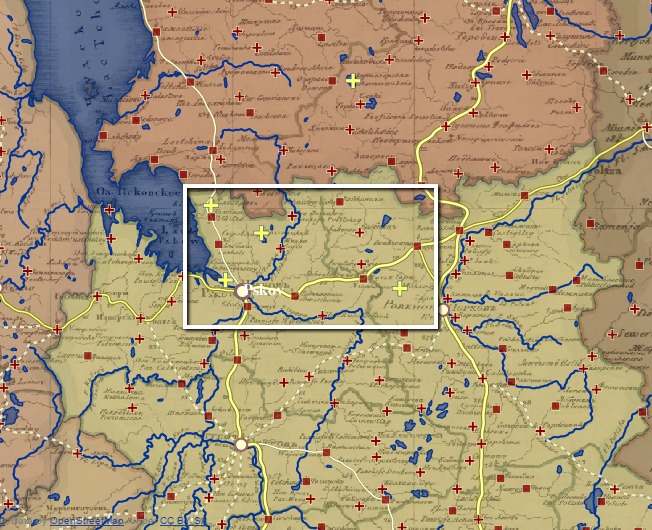
The atlas legend does not differentiate between types of monastic institutions. According to the toponyms, 24 of the 74 sites in this layer are sketes (скит), 12 are hermitages (пустынь), and the rest are garden-variety monasteries. Together they…
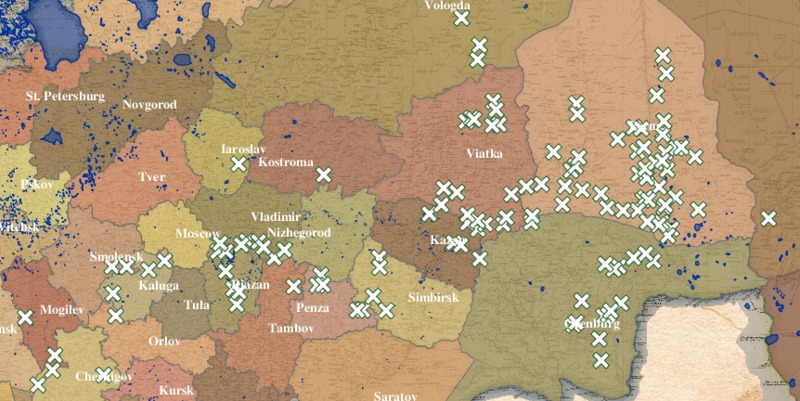
The atlas shows 148 factories (fabriki and zavody) spread across 25 provinces. The distribution is far from uniform: 50 factories are located in Perm alone.
If you go through this layer in detail (either on the Imperiia Map or in Dataverse) you…
If you go through this layer in detail (either on the Imperiia Map or in Dataverse) you…
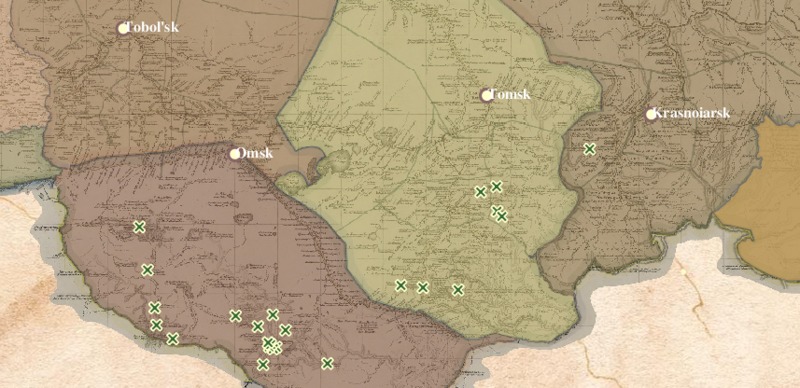
The atlas describes 24 mines in Omsk, Tomsk, and Enisejsk.
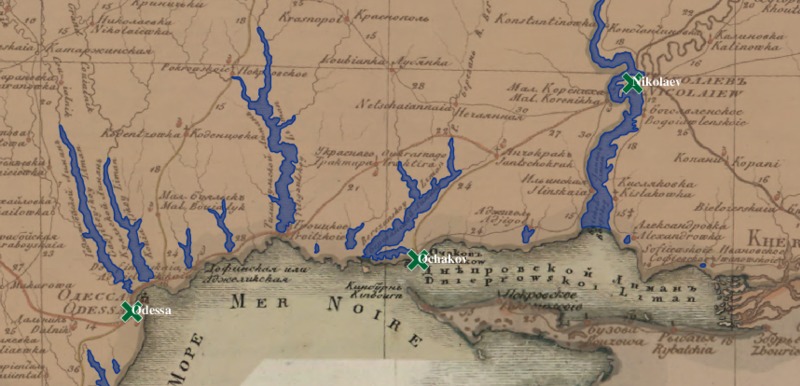
Of the ten customs locations noted on the atlas, five are on the Black Sea: Odessa, Ochakov, Nikolaev, Sevastopol, and Feodosiia. The others include St. Petersburg, three locations in Vilenskaia guberniia, and one in Lifliand.

This layer contains five confirmed canals and ten features that may, or may not, be canals as well. The five confirmed canals include the Mariinskoi, Berezinskoi, Ivanovskoi (pictured in the accompanying map), Oginskoi, and Ladoga canals. Together…
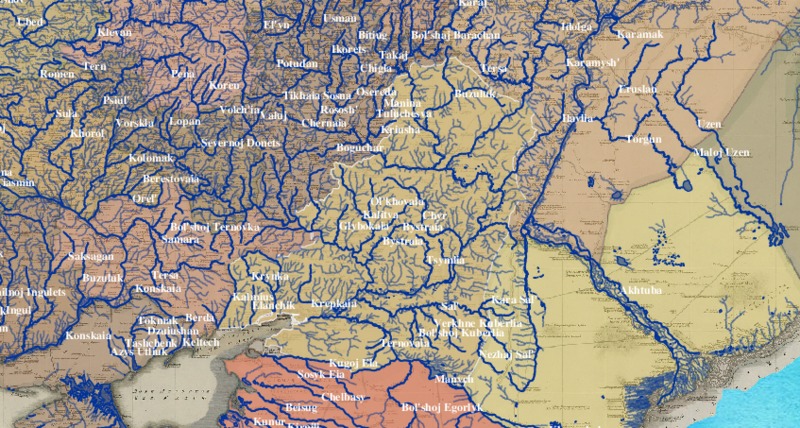
Russia was a riverine-boreal empire, replete with rivers ranging from the mighty Volga to the seasonal streams washing down hillsides in the Caucasian highlands. Rivers were a fundamental element of Russia's spatial profile, and they are a…
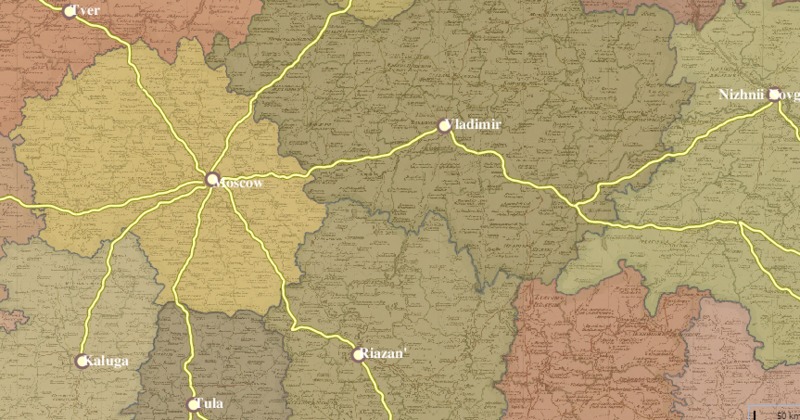
There were over 1,000 main post roads crossing the empire in the 1820s.