Browse Items (41 total)
- Item Type: Atlas Element
Sort by:
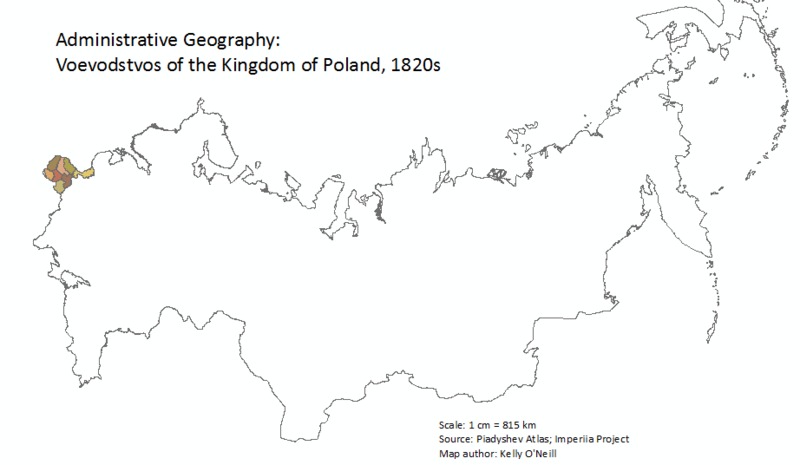
The voevodstvo was the main (secondary) administrative unit of the Kingdom of Poland; the equivalent of the guberniia in Russia proper.
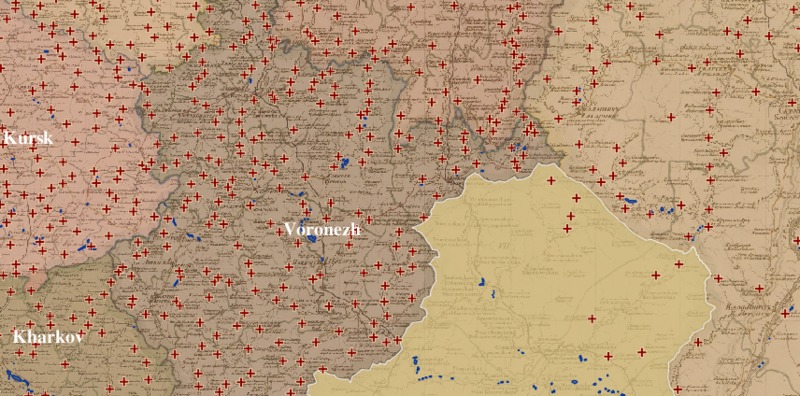
Villages came in several varieties, the derevnia and the selo being by far the most numerous. This layer describes the geography of the selo(село > села), the quintessential Russian village. A selo was generally a large rural settlement, the site…
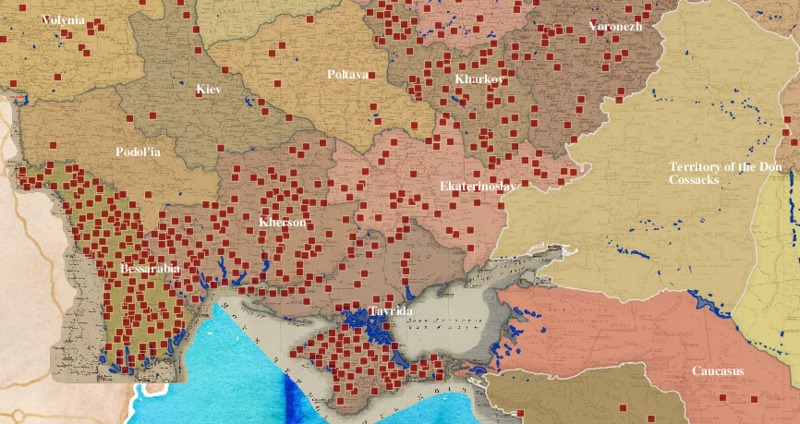
Villages came in several varieties, thederevnia and theselo being by far the most numerous. This layer describes derevni (деревня > деревни), which correspond, more or less, to the English term "hamlet": a small, unincorporated, rural settlement.…
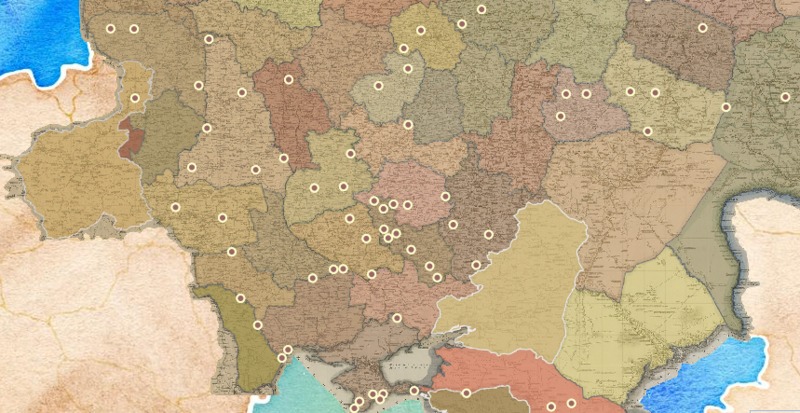
Russian law differentiated between towns that were, and towns that were not, seats of administrative power. In each district (uezd) there could be only one "district town" (uezdnyj gorod); other populated places that enjoyed the privileges of urban…
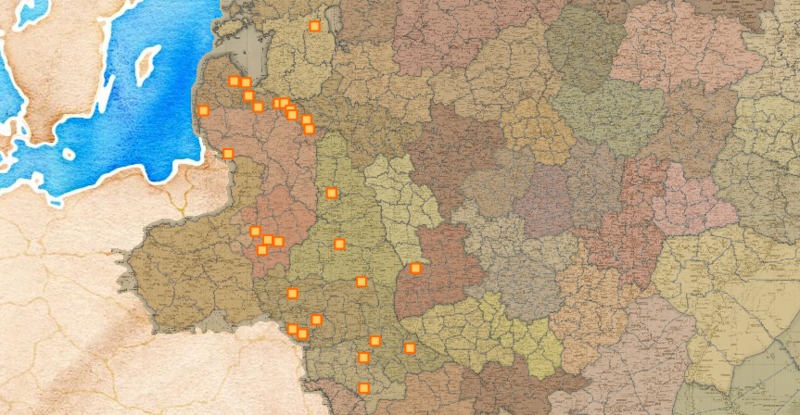
The korchma, translated in this project as tavern, was a genre of drinking establishment - one native to the Baltic provinces and the provinces formed from the lands of the Polish-Lithuanian Commonwealth. Coffee and tea were rarities in a korchma, as…
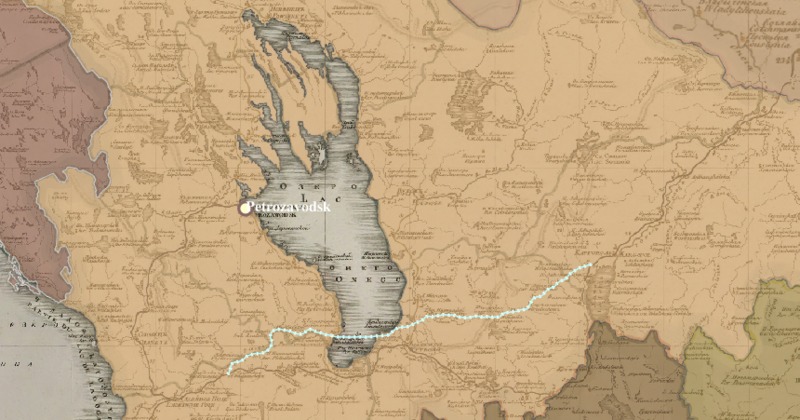
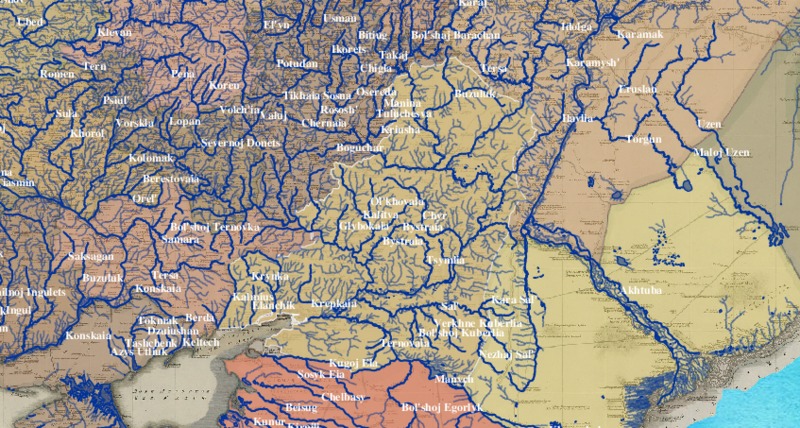
Russia was a riverine-boreal empire, replete with rivers ranging from the mighty Volga to the seasonal streams washing down hillsides in the Caucasian highlands. Rivers were a fundamental element of Russia's spatial profile, and they are a…
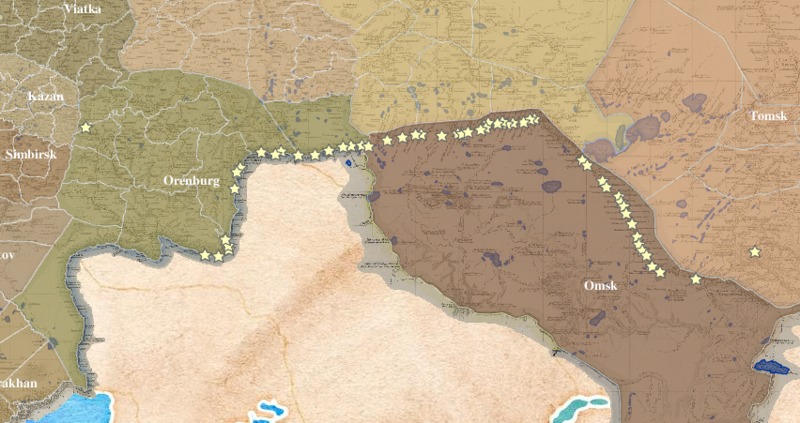
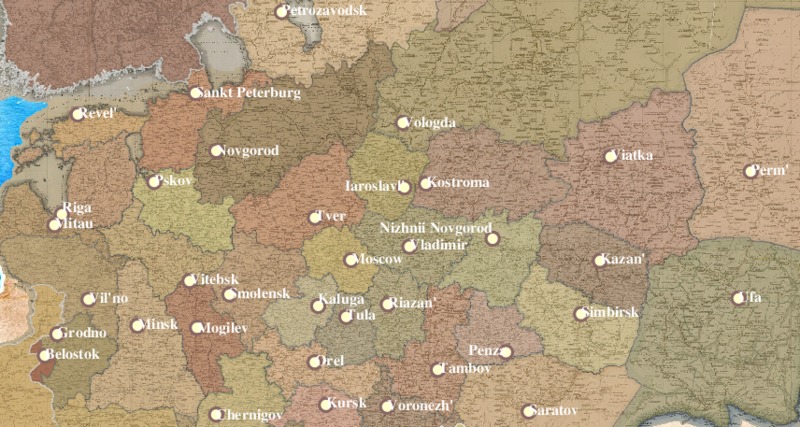
The provincial town (губернский город) was the administrative capital of the province, the seat of the civil governor, and in some cases a military governor or governor-general. Provincial towns ranged from the relatively humble (Vologda) to the…