Browse Items (41 total)
- Item Type: Atlas Element
Sort by:
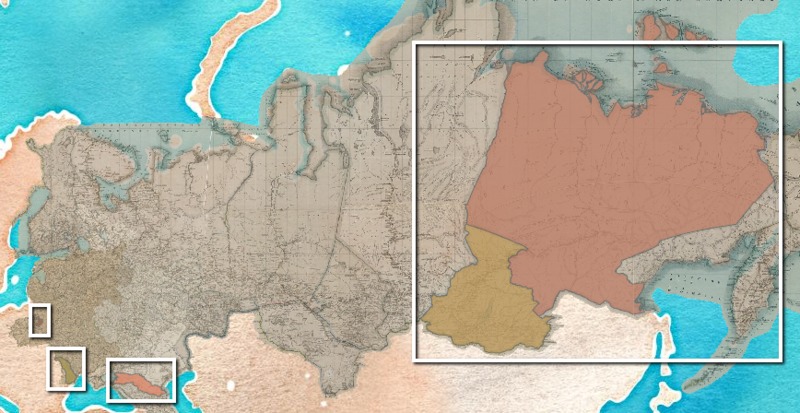
Provinces came in two forms. While the guberniia was the more standardized and more prolific form, the oblast' played an important role in the administrative geography of the empire as well. The oblast' was a secondary administrative unit.A quick…
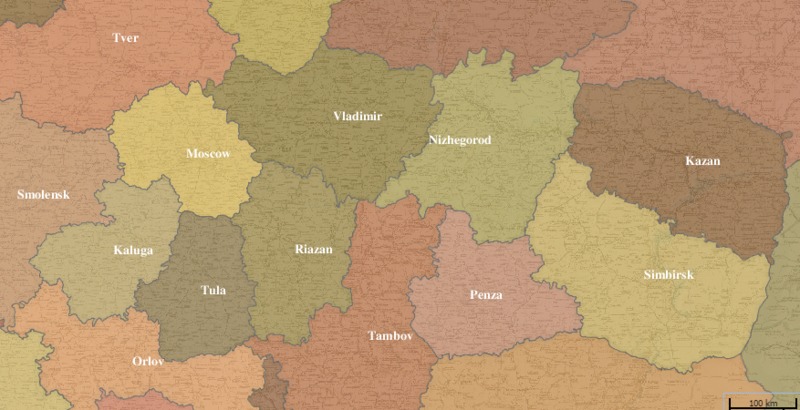
Provinces were the building blocks of the imperial administrative structure. Starting in the 18th century, provinces came in two forms: the guberniia and the oblast'. Empress Catherine II determined the shape and structure of the former, dominant…
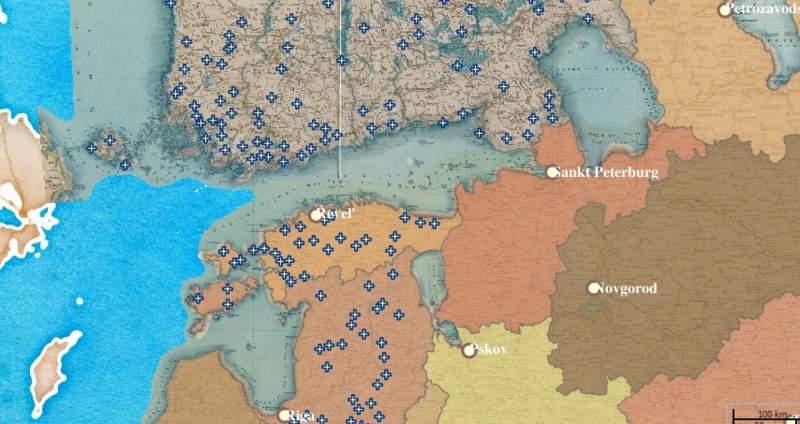
On the Piadyshev atlas, the kirchspiel (кирхшпил) denotes the presence of aProtestant parish. This layer doubles as a rough approximation of Protestant churches.
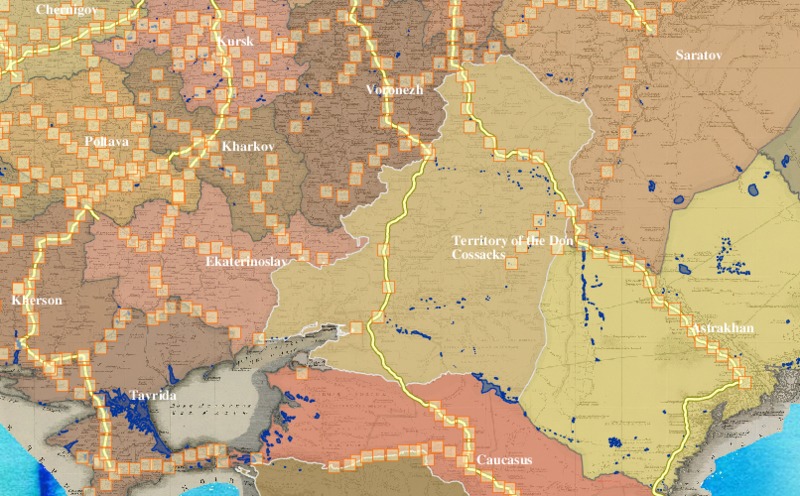
The Piadyshev atlas distinguishes between a post station found in avillage or town, and the sort of post station found out along the road (почтовая станица с двором).
The atlas notes the presence of 3,567 post stations of the former variety, and…
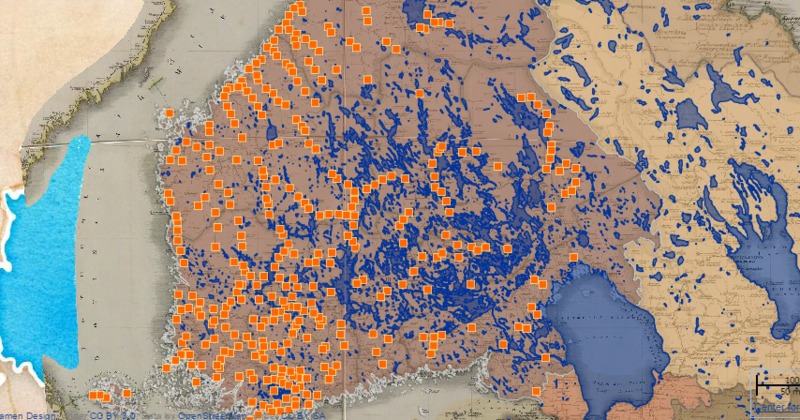
The Piadyshev atlas attests to the presence of 576 post houses. In some cases the post house (почтовой двор) was freestanding; in others it was designated as a "post station with a post house". The main distinction between the features in this layer…
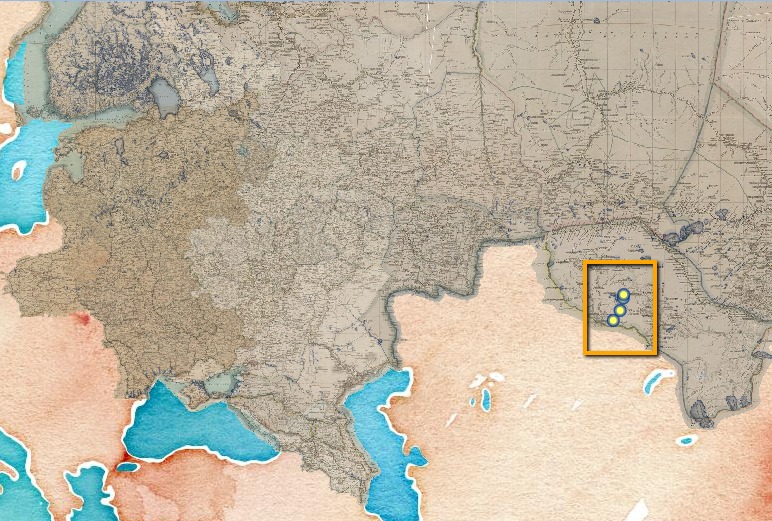
This is one of the most surprising map layers. Of the 59 sheets of the Piadyshev atlas, only one includes mosques in its legend. If you were to take the atlas as an authoritative source for the cultural geography of the empire, you would have no…
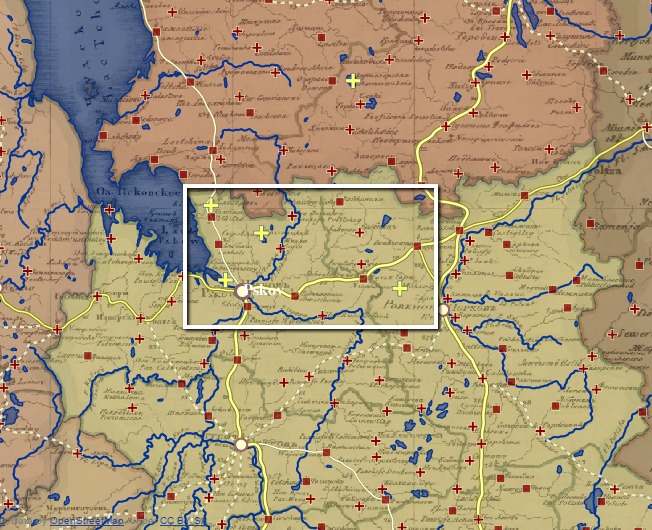
The atlas legend does not differentiate between types of monastic institutions. According to the toponyms, 24 of the 74 sites in this layer are sketes (скит), 12 are hermitages (пустынь), and the rest are garden-variety monasteries. Together they…
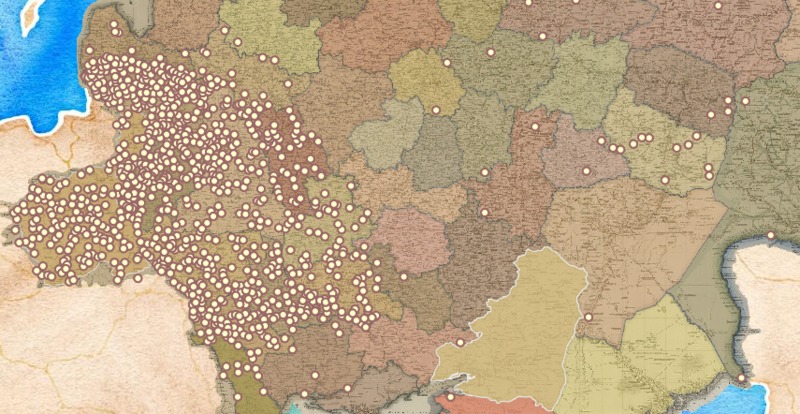
The "minor town" (mestechko/местечко) was distinct from other rural and urban settlement types. According to most sources, the mestechko had four distinguishing features:
In ethnic terms, the inhabitants of a mestechko were generally Jewish.
In…
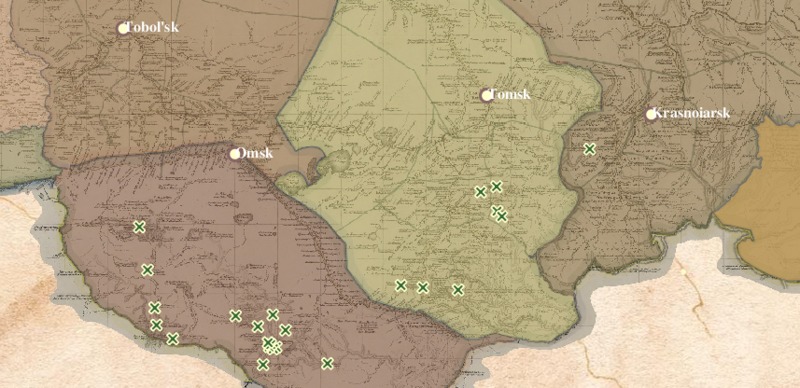
The atlas describes 24 mines in Omsk, Tomsk, and Enisejsk.
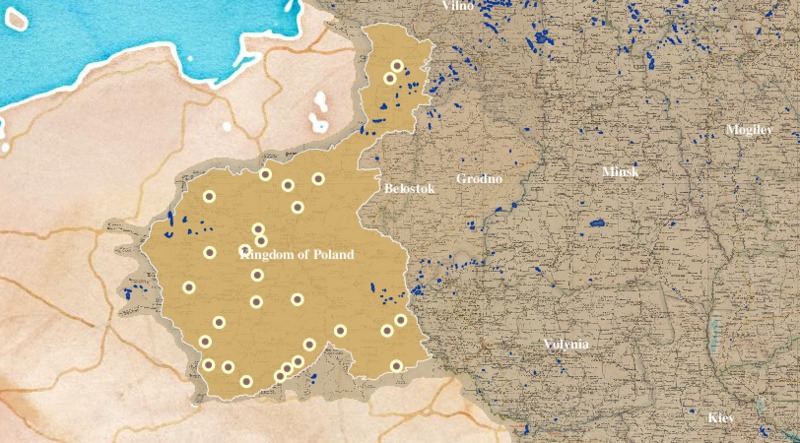
Mid-size towns are found only in the Kingdom of Poland and Grand Duchy of Finland. They are rough equivalents of the uezd towns.