Browse Items (12 total)
- Collection: Settlements
Sort by:
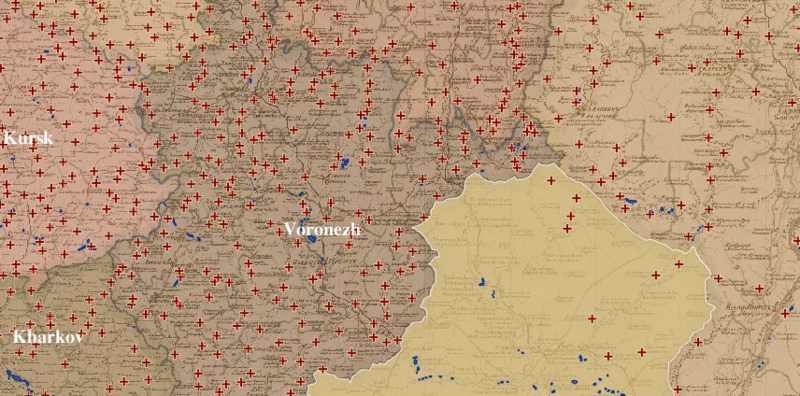
Villages came in several varieties, the derevnia and the selo being by far the most numerous. This layer describes the geography of the selo(село > села), the quintessential Russian village. A selo was generally a large rural settlement, the site…
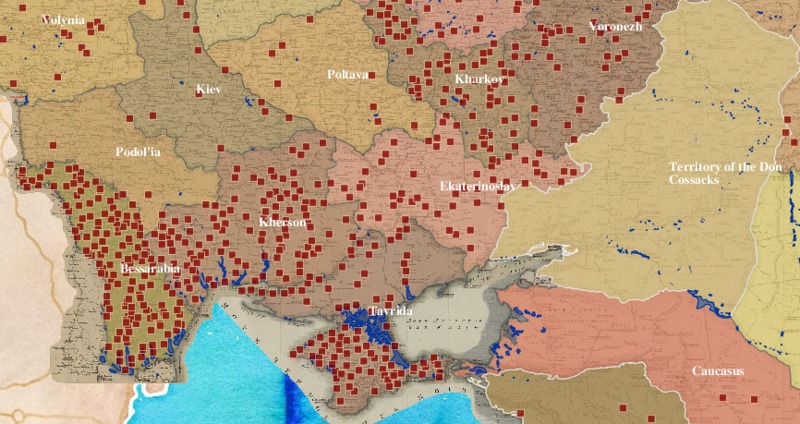
Villages came in several varieties, thederevnia and theselo being by far the most numerous. This layer describes derevni (деревня > деревни), which correspond, more or less, to the English term "hamlet": a small, unincorporated, rural settlement.…
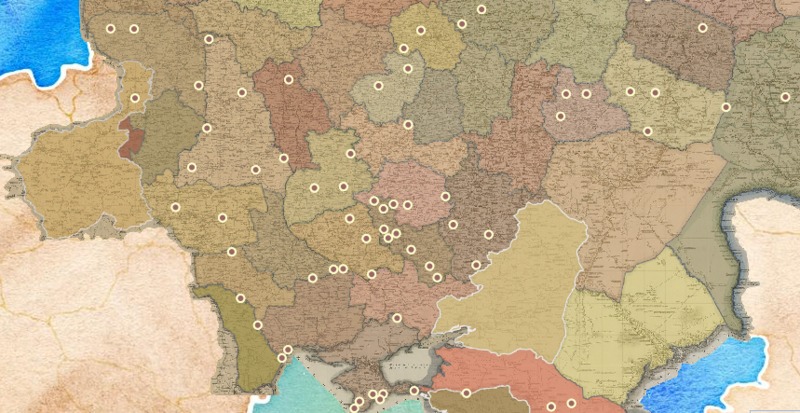
Russian law differentiated between towns that were, and towns that were not, seats of administrative power. In each district (uezd) there could be only one "district town" (uezdnyj gorod); other populated places that enjoyed the privileges of urban…
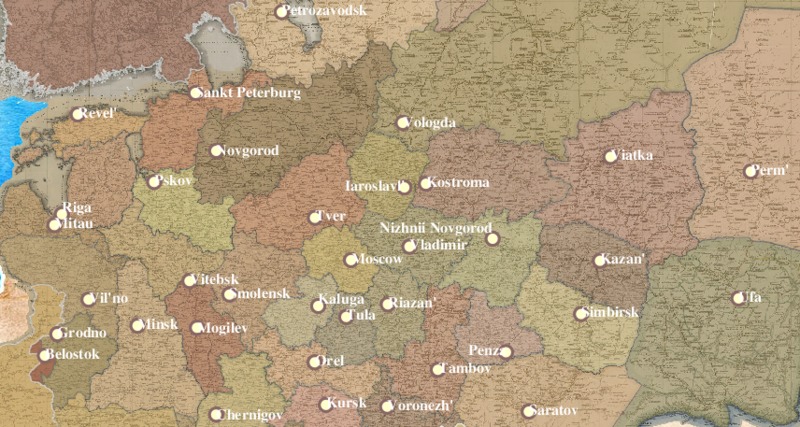
The provincial town (губернский город) was the administrative capital of the province, the seat of the civil governor, and in some cases a military governor or governor-general. Provincial towns ranged from the relatively humble (Vologda) to the…
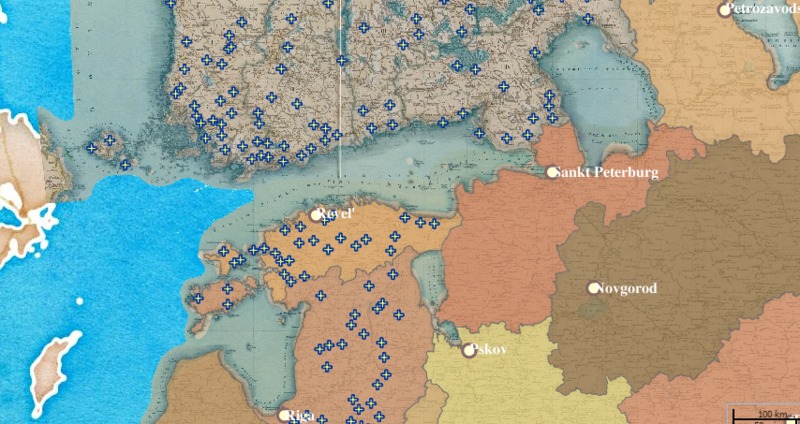
On the Piadyshev atlas, the kirchspiel (кирхшпил) denotes the presence of aProtestant parish. This layer doubles as a rough approximation of Protestant churches.
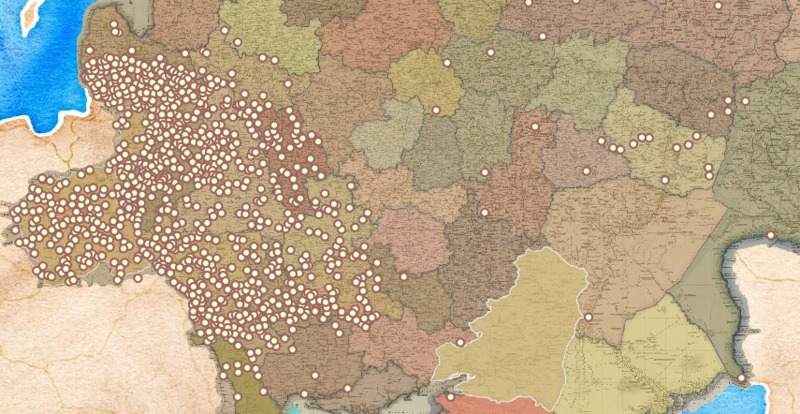
The "minor town" (mestechko/местечко) was distinct from other rural and urban settlement types. According to most sources, the mestechko had four distinguishing features:
In ethnic terms, the inhabitants of a mestechko were generally Jewish.
In…
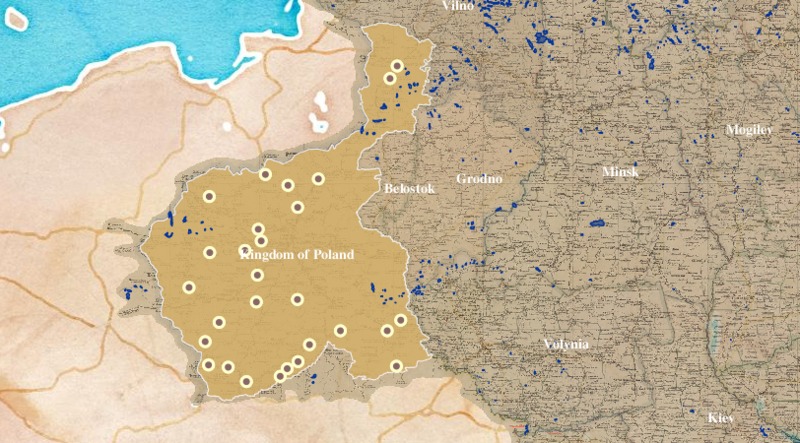
Mid-size towns are found only in the Kingdom of Poland and Grand Duchy of Finland. They are rough equivalents of the uezd towns.
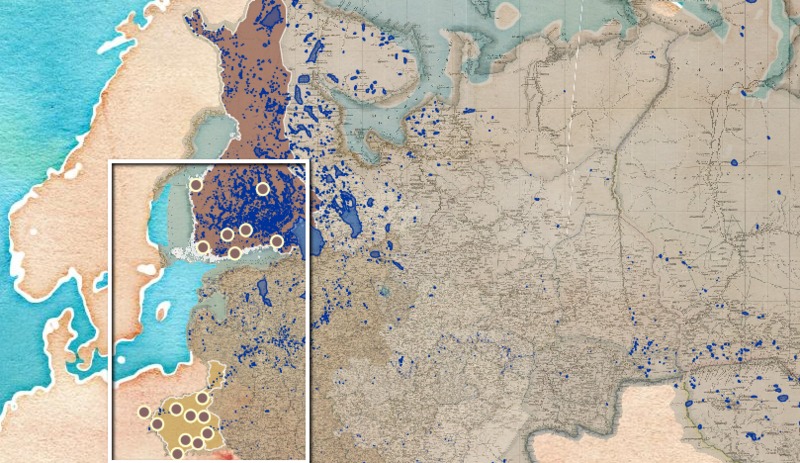
Large towns (большие города) are found only in the Kingdom of Poland and the Grand Duchy of Finland.
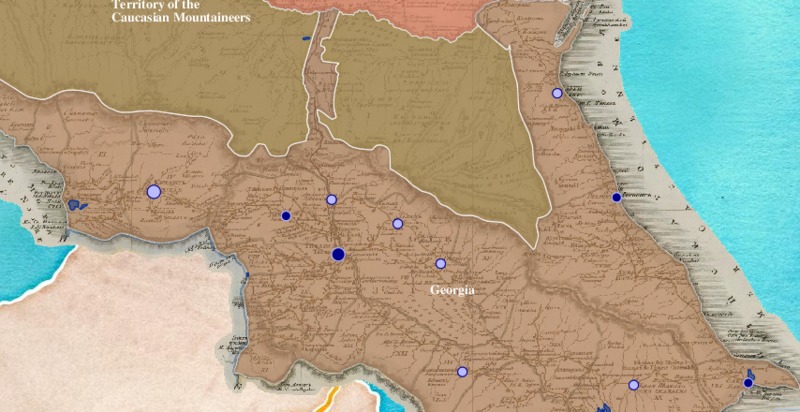
In the former kingdom of Georgia, annexed by Russia in 1801, we find towns distinguished by size and marked as fortified or unfortified.
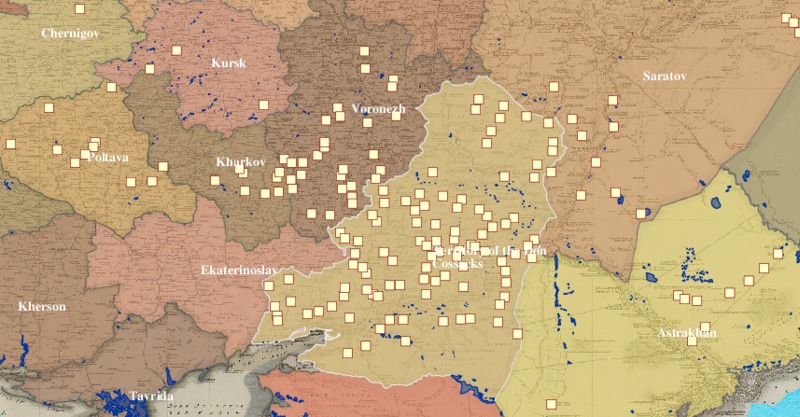
While most peasants lived in villages, a peasant holding a farmstead (хутор, khutor) lived - together with his family - on the land.