The Topic
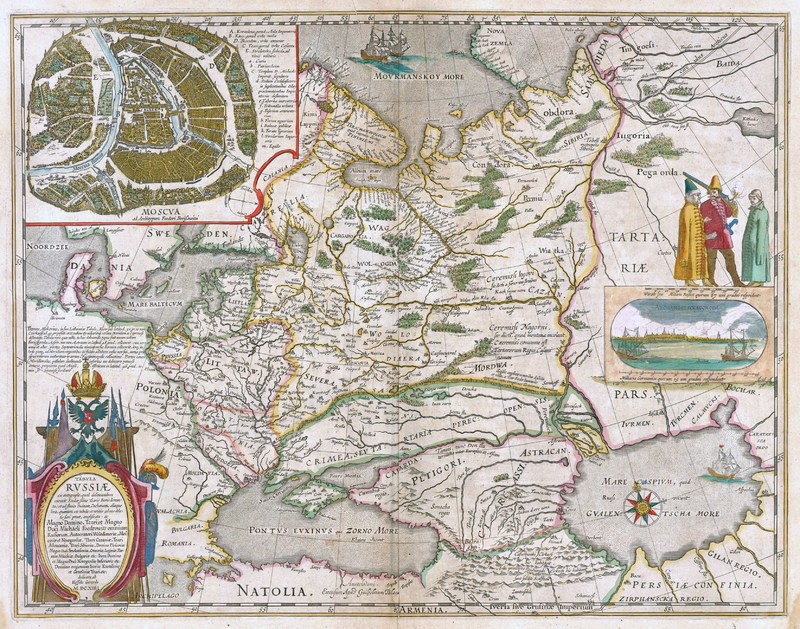
This digital paper, or paper/graphic-study hybrid, is a preliminary exploration of the spatial history of imperial Russia. It addresses one of the most fundamental themes in Russian history: the meaning and function of rivers. This is a theme that drew a great deal of scholarly attention in the nineteenth century but has suffered relative neglect in recent decades. Most scholars are content to assume that nothing could be more self-evident or incontestable than the significance of rivers to the development of the Russian state, society, and economy.
The river-centric narrative is a familiar one, made famous (or perhaps infamous) by Robert Kerner's The Urge to the Sea, published in 1942. According to that narrative, the story of Russian state and society has its source in the Valdai hills, whence it flows, inevitably, north, east, south, and west toward sea coasts that held the empire like the precarious setting for a ponderous jewel. Rivers, we have been told time and time again, provided both internal coherence and an irrepresible external impulse.
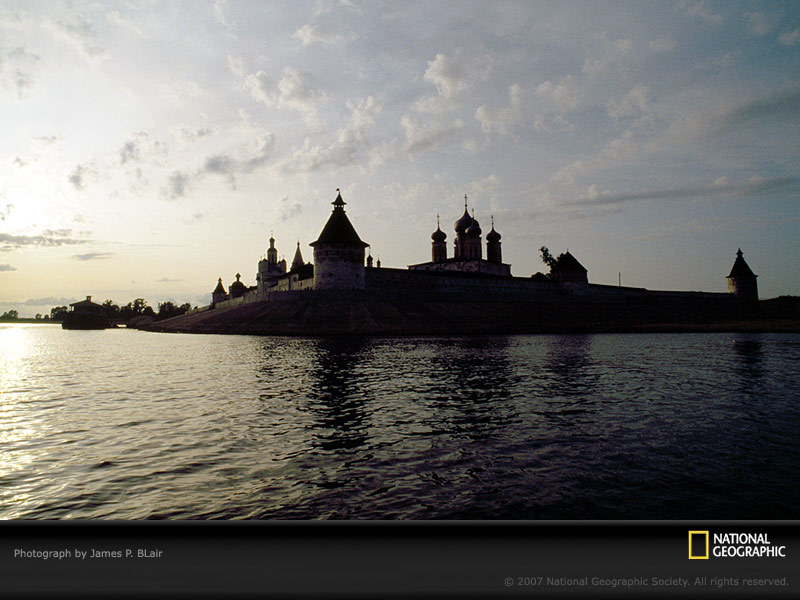
As the compilers of the “materials on river navigation” (see Sources) made clear, Russia is indeed blessed with many great rivers. Some have been sites of contestation (the Dnepr, the Amur, the Terek), others conduits for urbanization and the consolidation of imperial power (the Oka, the Volga, the Neva). They flow in a multitude of directions to empty into the White, Baltic, Caspian and Black Seas - thus the hook on which hangs the narrative of Russia’s expansionist tendencies.
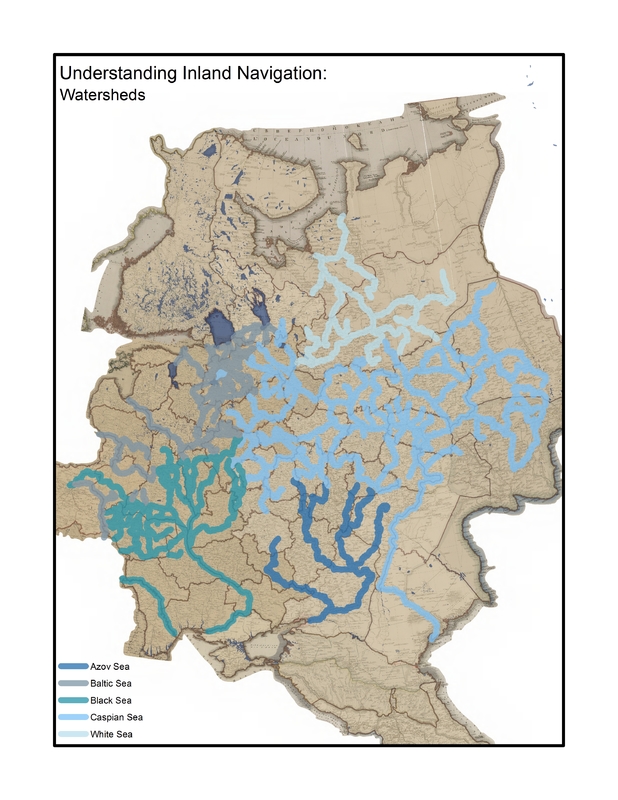
These tributaries, “with their own branches, draw on an enormous expanse [of territory]” and “the convergence of one maritime basin with another through [these river networks]” makes it possible to build artificial links between them. “In this way Astrakhan, lying near the mouth of the Volga on the Caspian Sea, has a direct, water-based connection with both Arkhangel’sk on the White Sea and with St. Petersburg on the Gulf of Finland in the Baltic. Goods produced in Ekaterinoslav, which lies on the Dnepr, can reach, by river, and without interruption, Danzig (Gdansk) on the Visla (Vistula) and Tilsit on the Neman.” (StatVrem2, xvii)
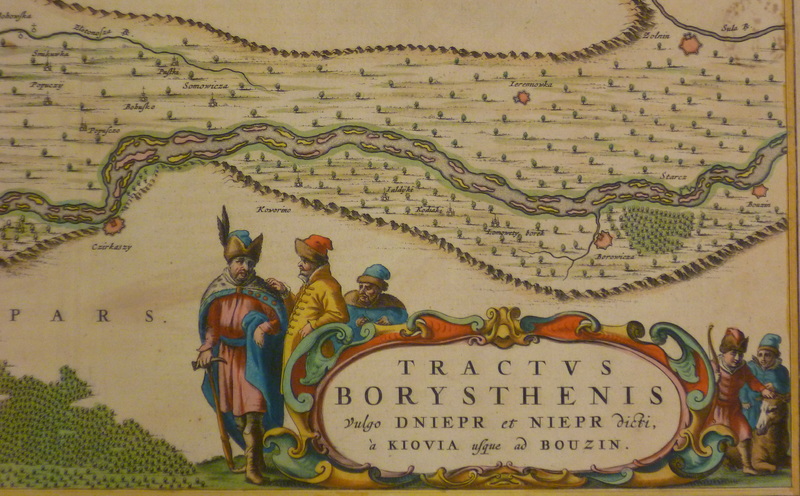
The importance of river networks for understanding the commercial economy is hardly a revelation. Then again, it is one of those sweeping claims about the Russian past that has escaped interrogation in recent decades and as a way of moving in that direction I’d like to propose a few corollaries
First, Russian rivers have a much-neglected ideological value. While it is beyond the scope of this paper, there is an argument to be made that hydrographical imagination was a key element in the evolution and articulation of Russian identity in the imperial period.
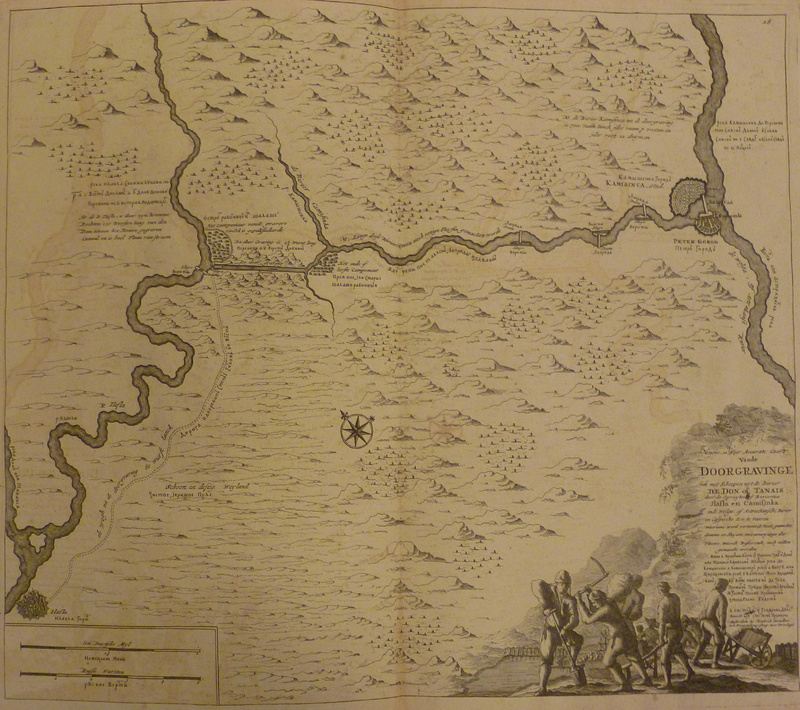
Second, Russian rivers did not provide not a static backdrop against which economic history could unfold. Rivers are as unnatural as they are natural entities, shaped by human activity as they are by other elements of the environment. This simple fact gets lost in most of the existing literature, but it seems to me that exploring the relationship between rivers and the people who used, managed, navigated them is an extraordinarily productive vein of research.
Third, while the authors of the Statisticheskij Vremmenik were right to highlight the impressive hydrographical connectivity in place by the 1870s, they tied the value of the Russian system to its sheer breadth and to the implied significance of connecting the interior reaches of the empire to the great commercial seaways. My intention is neither to contest or to trump this argument: the filagree of great rivers and meandering tributaries undeniably connected remote nodes of production to consumers in a handful of large port cities. However, I would like to reorient this story; to see how far we might push the notion that Russian inland navigation can and should be understood on a different scale, and from a multiplicity of perspectives.
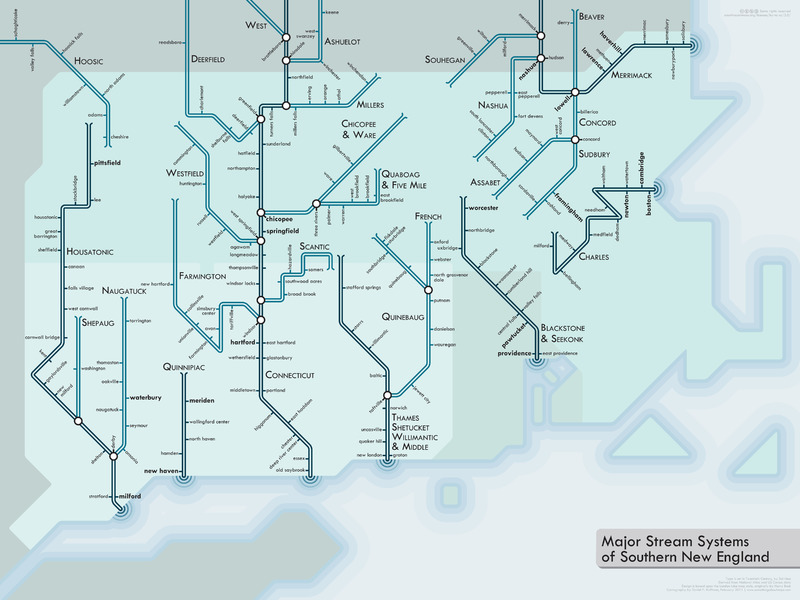
In other words, this is an argument about the need to understand the infrastructure of mobility as a system composed of multinodal, multidirectional networks of exchange rather than as a set of pathways moving people, goods, information, and power inexorably to the (political and commercial) capitals. It is an argument not about privileging the local, but about thinking more deeply about scale, about units of analysis, about connectivity, and about the meaning of economic space.