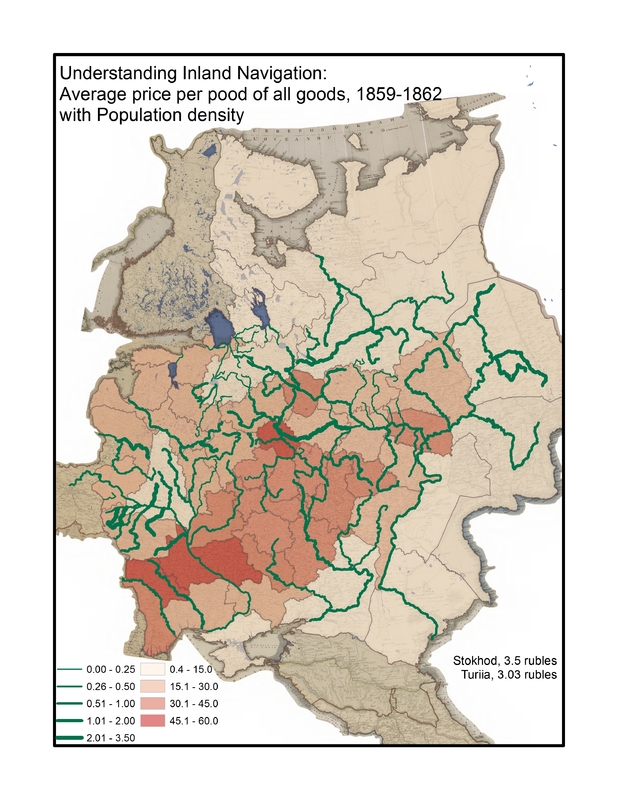
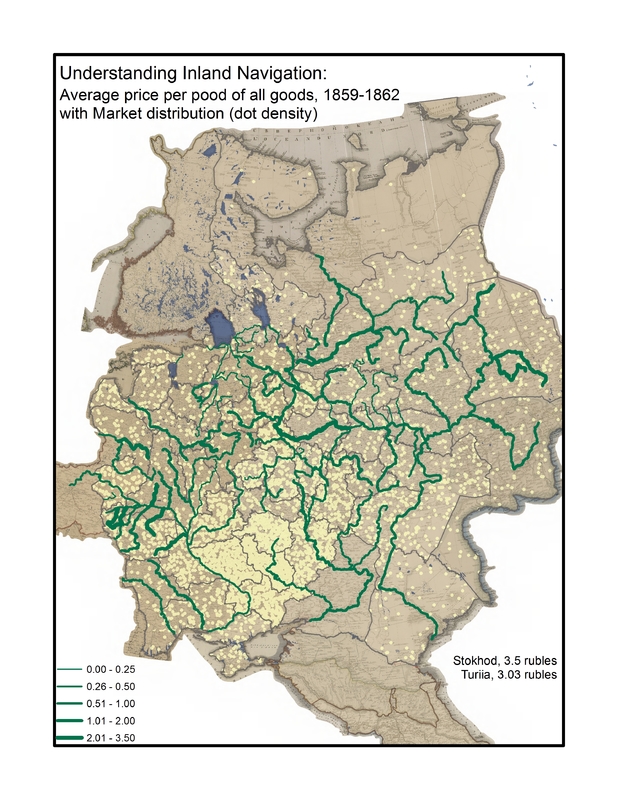
Aggregations
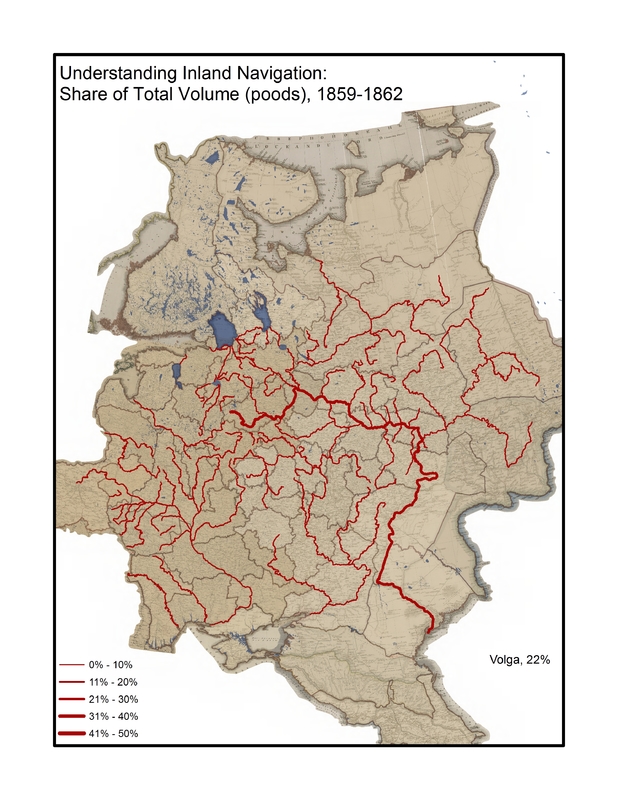
Rivers were not just the backdrop (or a backdrop) against which domestic trade unfolded: rivers shaped trade, and were in turn shaped by it.
This map series shows how easy it is, once one begins to press on the data, to introduce spatial complexity and variability into our understanding of riverine trade. The macro-level argument that the Volga was the main trade thoroughfare remains unscathed of course. But taking a few different cuts at the data opens what strike me as some interesting fields of inquiry and raises specific questions for further research.
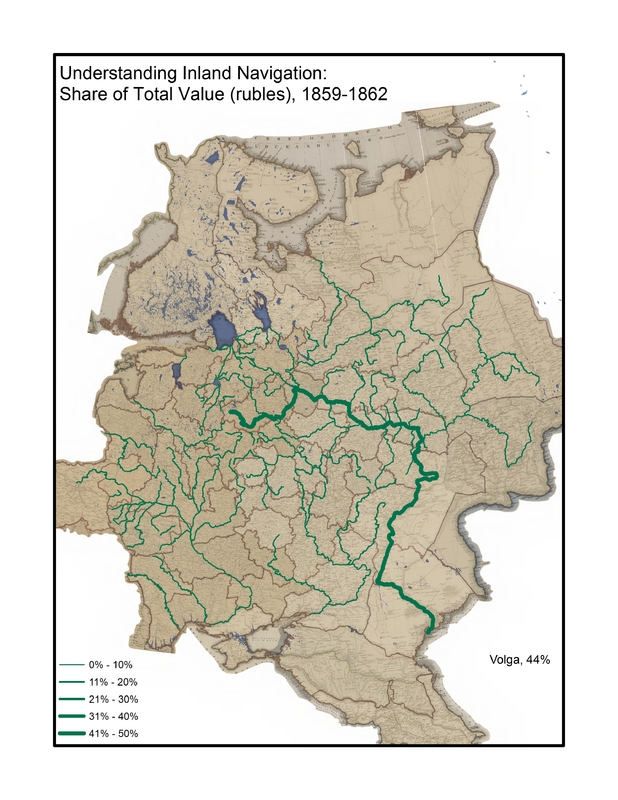
These first two maps recapitulate the story of the dominance of the Volga: no other river came close in terms of the volume or value of goods traded in the middle of the 19th century.
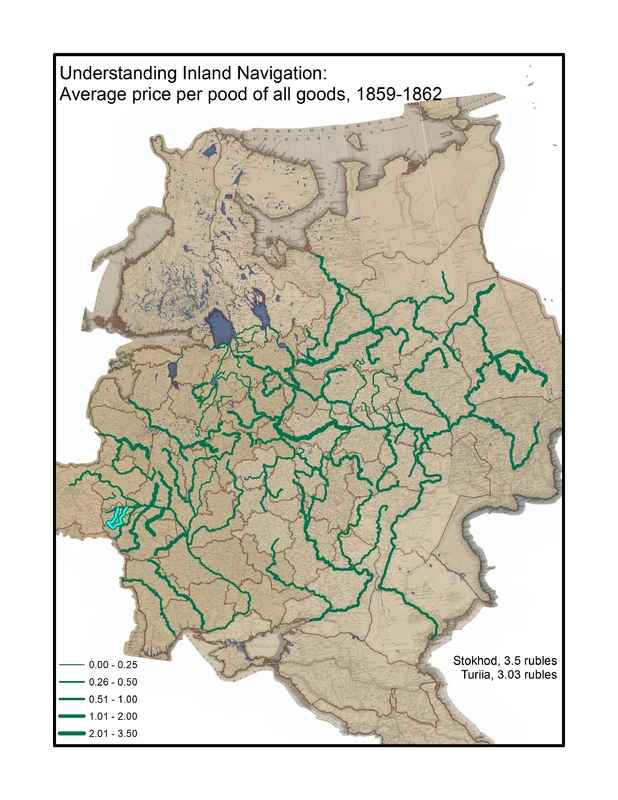
However, this visualization of the average price per pood for all goods traded on each river suggests a very different narrative. The Volga might have enjoyed far and away the largest share of volume and value, but if you are interested in identifying the artery with the highest price per pood, you must look elsewhere...