Statistical Materials on River Navigation
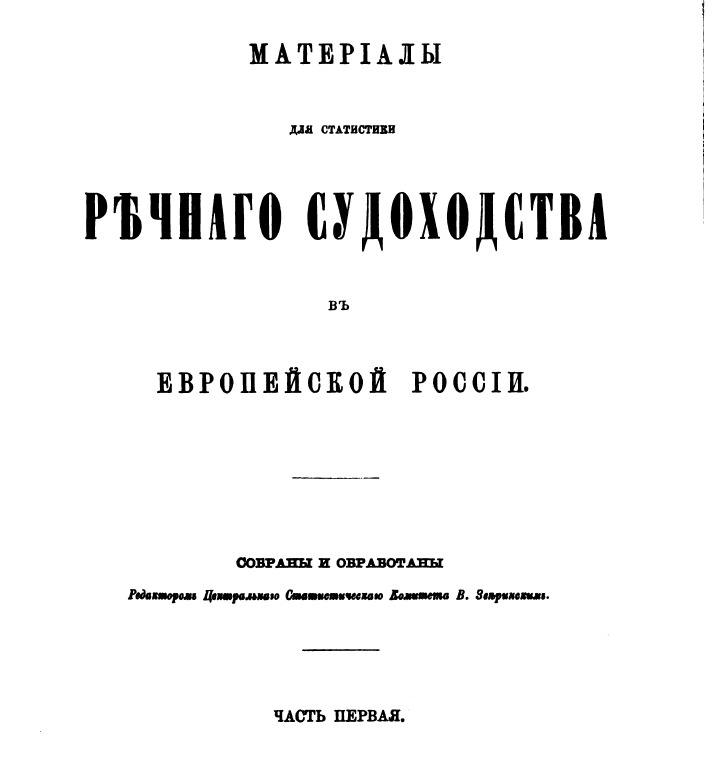
Statisticheskij Vremennik Rossijskoj Imperii vypusk 2, chast' 1: Materialy dlia statistiki rechnago sudokhodstva v Evropejskoj Rossii (Sanktpeterburg: izdanie Tsentral’nago statisticheskago komiteta Ministerstva Vnutrennykh Del, 1872)
This volume was compiled by the Central Statistical Committee under the leadership of V. Zverinskij at the request of Petr Petrovich Semenov who, in addition to serving as committee chairman from 1864-1874, represented Russia at the 7th International Statistical Congress in 1869 and accepted the charge to work on river transit. The compilation of the volume required an enormous amount of labor over the course of three years.
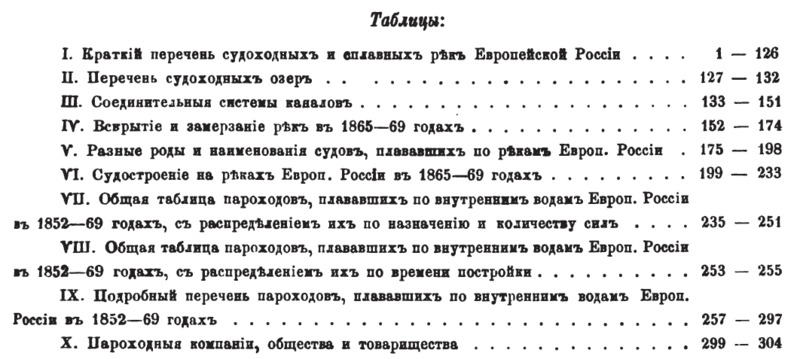
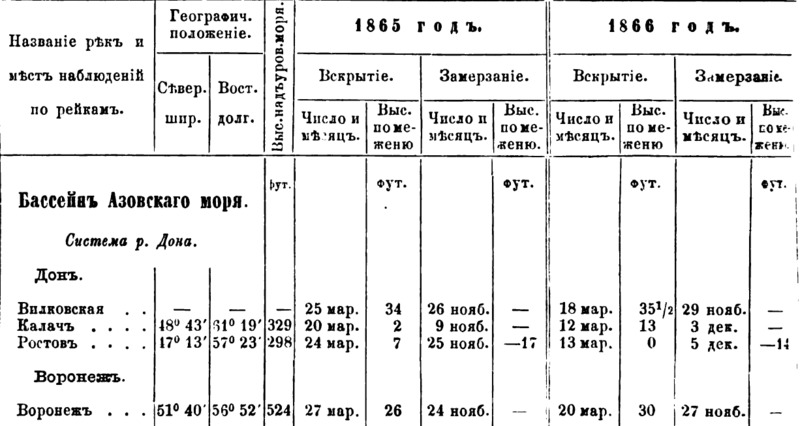
The resulting ten tables include painstakingly-collected data describing variations in water levels and flows of Russia’s (navigable) rivers and lakes, the location of rapids and dams, the volume and value of goods transported along them, the number of ships built along their banks, the number of steamships in operation, and more.
One of the pleasures of digging into statistical data of this kind is that the more one pushes on a 19th-century spreadsheet the quicker its contents dissipate, their authority compromised by caveats and inconsistencies and lacunae. The statistical table is, in other words, as vulnerable to critical reading as any other document despite its trappings of scientific authority and objectivity.
The map series that constitutes the core of this paper demonstrates the limitations, idiosyncrasies, and revelatory qualities of these sources, but let me offer here one example of the conceptual and methodological challenges faced by those seeking to wrangle Russia's river network into a series of tables.
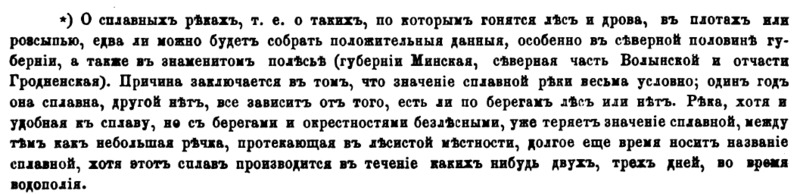
Though they bury the acknowledgment in a footnote, the statisticians working on the Materialy were aware that it was next to impossible to compile an authoritative description of the empire’s hydrographic landscape. It was not - or not only - a question of manpower or know-how. Instead, the complication stemmed from the subtle-yet-crucial riverine typology according to which Russian statisticians differentiated between splavnye and vzvodnye rivers. A splavnaia reka was defined as a river along which timber and wood could be floated using some combination of raft, current, and sail. By contrast, vzvodnoe sudokhodstvo required the intervention of steam, horse, or manpower.
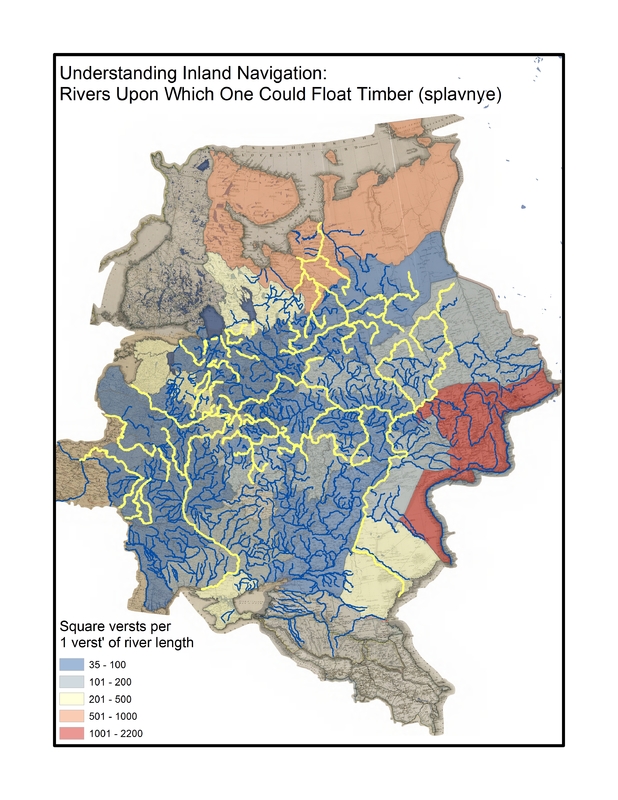
Compiling a complete register of the former, particularly in the thickly forested areas of the northern provinces, Minsk, Volynsk, or Grodnensk was next to impossible. After all, the only criterion necessary for designating a body of water splavnaia was the presence of timber. "A river suited to [navigation] yet surrounded by unforested land is not splavnaia," acknowledged the statisticians, "while a small stream flowing through forested terrain is deemed worthy of the title splavnaia reka even if the floating of the timber takes place over the two or three days of high flooding a year." Moreover, a river might easily be splavnaia one year and nesplavnaia the next simply by virtue of annual rainfall or whether or not the local inhabitants felled and floated trees. Thus the accuracy of statistical descriptions of the empire's trade infrastructure were dependent on a range of environmental, economic, and semantic variables.
The Volga was always the Volga, of course, and some might say that is all that mattered.
However, the statisticians and geographers involved in compiling the Materialy would not have agreed with that line of reasoning. To them, no description of the Volga could be considered complete without a description of each of its tributaries, variable or elusive as they might have been. Even if they did not take such an indulgent view of the riverine landscape, the genre of the statistical table exercised a crucial leveling effect: the length of the Volga might dwarf that of the Kokshaga, but each appeared as a discrete line item in table after table, required the same set of calculations, and enjoyed the same conceptual weight as any other member of a complex network.
The point here is that the process of mapping spatial data (in this case statistical tables compiled by the Ministry of Internal Affairs) can both lay bare the idiosyncrasies of our sources and, more importantly, suggest unanticipated questions about the ways in which Russians (or those Russians engaged in such issues) thought about and described the spaces they inhabited.