Salt
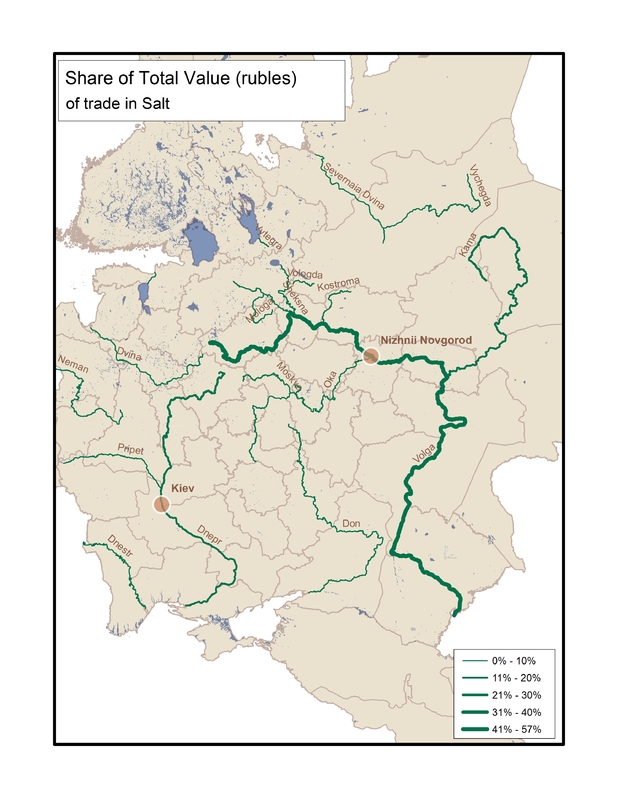
57% of the total value of the salt trade in these years (5,632,067 rubles) flowed along the Volga. Another 19% flowed along the Kama, and %15 along the Dnepr.
The average salt price was 0.55 rubles/pood.
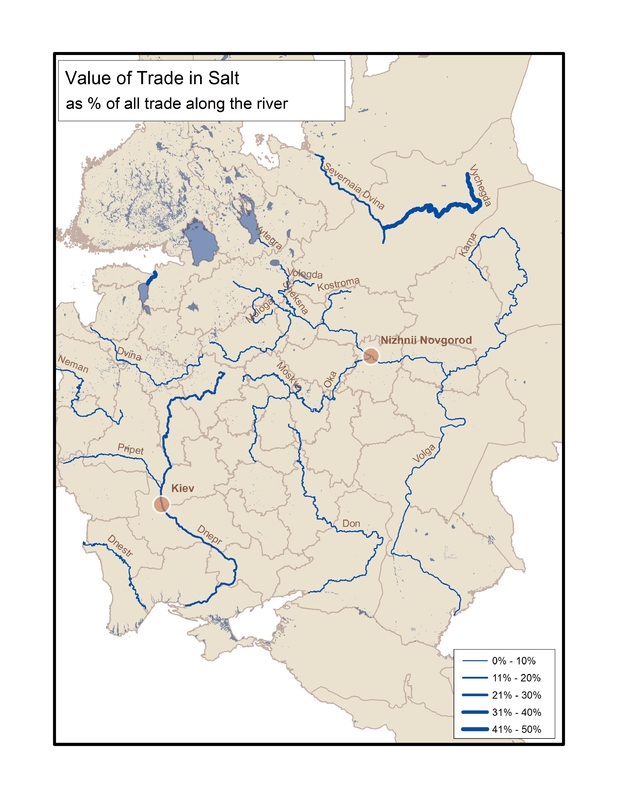
By contrast, salt constituted only 4.3% of the value of Volga trade. Salt mattered more along the Severnaia Dvina / Pinega / Emtsa corridor (12%), the Dnepr (14%), the Narova / Luga (41%) and the Vychegda / Lokchima / Viled / Vym / Vocha system (45%).
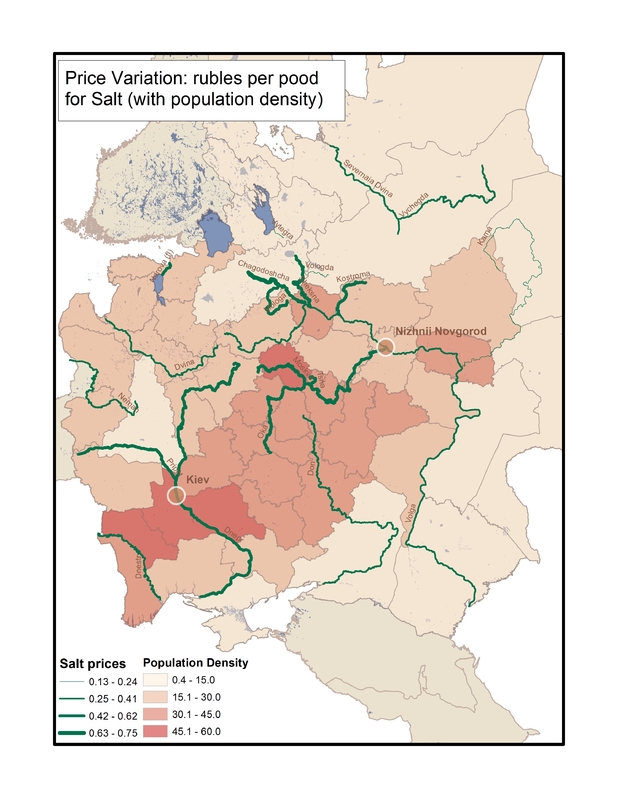
The highest prices for salt fetched in these years were along the Chagodoshcha (0.75 rubles/pood) and the Tsna (0.62 rubles/pood). Prices were lowest along the Vytegra (0.13 rubles/pood) and Kama (0.17 rubles/pood).
Along the Vychegda river in Vologodskaia guberniia, where salt was more important than any other commodity, the price was only 0.3 rubles/pood.
Looking at this data set against the population density we seem to be able to identify a correlation between high population density and high salt prices.
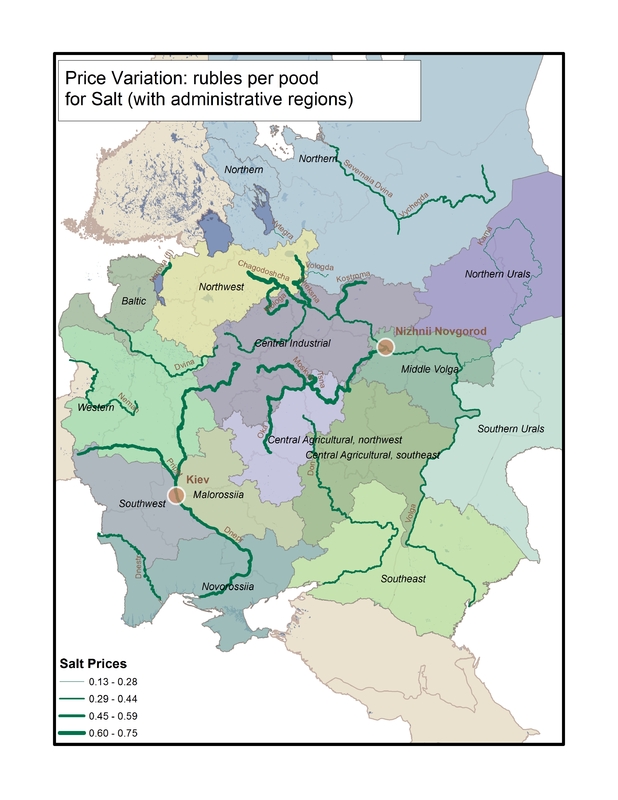
By contrast, the administrative regions are less helpful.